Hey everyone, it’s Sam from that independent elevator parts supplier you might’ve seen around—you know, the one that doesn’t just push one brand like a factory robot. Lately, I’ve been getting the same question 5 times a week, every week, from techs, small service companies, even random building managers panicking because their usual part supplier flaked last minute: “Can I get installation training for other brand elevator parts?” Other Brand Elevator Parts
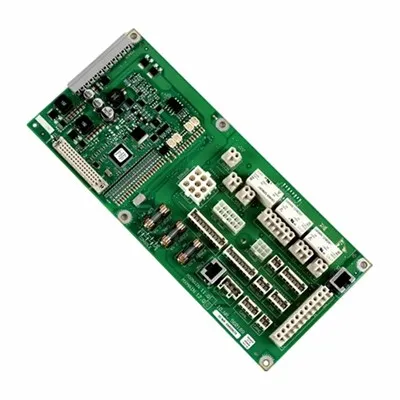
First off, let’s cut the crap and be real—this isn’t some far-fetched wish. I didn’t start doing this 7 years ago to be the “other guy” who just drops boxes at loading docks and vanishes. Most people don’t know that installing elevator parts isn’t like swapping a car air filter. Even a tiny sensor or a call button on a brand that’s not the same as the one your crew uses? Mess that up, and you’re not just back at the shop returning it—you’re on a service call at 2 a.m. fixing a slip that could’ve been avoided.
Let me paint a picture of what I see every day. Last month, a dude named Jake from a small maintenance outfit in Ohio hit me up. He’d grabbed some replacement door rollers from a big-box brand supplier (you know the one that’s got a warehouse full of 10 brands, barely cares if parts fit right) for an old Otis elevator that’s been on its last legs since the 90s. His techs swapped ’em in, but the doors kept jamming mid-close. Turned out, the roller offset was a mill off—something you’d only catch if you knew the difference between old Otis 2000 rollers and the off-brand knockoff they sold him. Worse, he had no clue how to adjust the limit switch once the rollers went in, because he’d only ever trained on Gen 2 Otis parts. He spent 3 extra hours on site, got a $500 bill that ate his weekly profit, and called me asking how we could’ve helped before he bought the wrong part in the first place. That’s the exact reason we rolled out our training program 2 years ago.
Now, let’s get specific—what counts as “other brand” here? I’m not talking about the random no-name part you find on Alibaba that falls apart after 2 weeks. We’re talking about cross-brand swaps that make sense: like replacing a KONE brake on a ThyssenKrupp unit, or a Mitsubishi call button on a Toshiba elevator, or a modernization part for a Schindler that’s been out of production since 2010. These are parts that work, fit, and are tested by third-party labs (UL 1028 certified, if you care), but your crew might not have the deep dive into that specific brand’s quirks. That’s where our training comes in—this isn’t like watching a YouTube video of a guy swapping a part and cutting corners.
Wait, but some guys will say: “Why would a parts supplier train me on another brand? That’s their competition!” Fair question. I get it. A lot of big brand suppliers keep their techs on a short leash—they’ll train you on their parts, but only theirs, and if you ever so much as ask about a cross-brand swap, they act like you’re trying to steal their lunch money. Here’s the thing: I’m not part of a big corporate team that makes money only if you buy their entire elevator line. My business lives or dies by making sure your install works the first time, so you’ll come back instead of ghosting me after a botched job. If your tech can’t install a part right because they don’t know that brand’s wiring logic, I lose a customer. It’s that simple—no shady motives, just common sense.
Now, what does the training actually look like? Let’s be honest, nobody wants to sit through a 8-hour PowerPoint in a stuffy conference room when you’ve got 10 service calls to hit. All our sessions are hands-on, flexible, and tailored to what you actually need. If you’re a one-man band fixing old elevators, we’ll do a 2-hour one-on-one call (or in-person, if you’re within a 100-mile radius) walking through that specific brand’s common parts—rollers, brakes, call buttons, even the control panel modules. We’ll bring a demo elevator frame, show you how to torque bolts to the exact spec (not the “tight ’til it feels right” that kills elevators), how to calibrate limit switches so doors don’t jam, how to test safety features without triggering a panic alarm (trust me, you don’t want that in a 12-story apartment building at 7 a.m.).
If you’re a bigger company with a whole crew, we’ll do group sessions at your shop. Last quarter, we had a crew from Florida that needed training on installing modernization parts for a mix of 6 different older brands—they didn’t have time to bounce between 4 different brand-specific training courses, so we packed a day of cross-brand basics: how to spot compatibility issues before you even unbox the part, how to adjust parts so they work with whatever control system you’ve got, and common pitfalls that make techs waste 3 hours on a job that should take 45 minutes. We also send out quick cheat sheets—printable, laminated, the stuff you can tape in your truck so a new tech doesn’t have to Google mid-job. No jargon, no confusing acronyms we make up, just straight-up stuff that works.
But wait—can you get training for any other brand? That’s the big question, right? Short answer: mostly. We do have a few we focus on because they’re the most common cross-brand swaps: KONE, ThyssenKrupp, Mitsubishi, Otis, Toshiba, Schindler, even some of the older regional brands that most suppliers ignore. If it’s a rare brand? We can pull specs from the UL database, cross-reference with our test results, and build a mini training session just for you—no extra markup, because we hate when suppliers nickel-and-dime you for stuff that should be basic.
Let me hit on some other stuff people ask me. “Is this training free? No, we’re not a charity, but it’s way cheaper than going to a brand’s official training course that costs $1,200 a day and only teaches you about their single brand. Our sessions range from $250 for a quick 2-hour deep dive to $800 for a full day of cross-brand training, and we throw in a free set of those laminated cheat sheets for every tech that shows up. Also, if you buy a bulk order of parts from us in the next month, we knock 20% off the training cost—because we know most of you aren’t just buying one part, you’re stocking up for a whole building.
Another thing: a lot of techs tell me they’re scared to ask for this training because they think the supplier will look at them like they’re wasting time. No—we get it. I used to be a field tech, back when I started in this industry 15 years ago, so I know what it’s like to show up to a job with a part you ordered online, and have no clue how to make it play nice with your elevator. I’ve been that guy, standing in a stairwell at 9 p.m., holding a part, Googling for 2 hours, and panicking because the building manager is texting nonstop. That’s why we built this—so you don’t have to do that anymore.
Let’s talk about a win, real quick. A few months back, a crew from Dallas hit us up because they had a job with 10 old Toshiba elevators that needed new door operators. The Toshiba official training was booked for 3 weeks out, and the building manager was on their case to get it done in 1 week. They bought the operators from us, and we did a 3-hour hands-on training at their shop, walking through exactly how to mount the operators, adjust the door tracks, and calibrate the safety sensors. They installed all 10 in 2 days, no call backs, no extra charges. They even sent me a box of BBQ sauce as a thank you. That’s the stuff that makes this job worth it, not the fancy trade shows or the big contracts.
Now, I’m not gonna lie—there are limits. We can’t train you on installing a full new elevator from scratch, and we can’t guarantee a part will work if you order the wrong model number (but hey, we double-check every order before it ships to make sure you get the right one). We also can’t help you with stuff that’s way out of our lane, like major control panel overhauls that need a licensed electrician to sign off on. But for the day-to-day stuff that makes up 90% of elevator service—swapping parts, adjusting doors, fixing buttons—that’s what we’re here for.
Wait, some people will say: “But why not just go to the official brand training?” Again, fair, but official training is locked into that one brand. If you work on a building that has parts from 3 different brands, you need 3 different training courses, 3 different cheat sheets, and 3 different logins for their support lines. That’s a huge waste of time and money. Our training covers the cross-brand stuff you actually use, plus the universal basics that apply to every elevator—like how to use a multimeter safely, how to spot a bad wiring harness, how to test emergency call buttons. Stuff that every tech, no matter what brand they work on, needs to know.
Let me wrap this up. The short answer to “Can I get installation training for other brand elevator parts?” is a resounding yes—but it’s not the same as the stuff the big brand suppliers sell. It’s practical, it’s tailored to your job, it’s not a one-size-fits-all PowerPoint, and it’s built by people who’ve actually spent time in the field, not just in an office crunching numbers.
If you’re tired of losing money on botched installs because you don’t know how to swap a KONE brake on a ThyssenKrupp unit, or you’re scared to take that 2 a.m. service call because you ordered a call button from us and have no clue how to calibrate it, hit us up. We can chat about what parts you work with most, build a training plan that fits your schedule (even nights or weekends, because we know you can’t take time off during the day), and make sure your next install goes smooth. No pressure, no sales pitch, just a real conversation about making your job easier.
Oh, and one last thing—if you’re a building manager reading this, not just a tech or service company, this applies to you too. If you’re hiring a maintenance crew, ask them what training they have for cross-brand parts. A lot of cheap crews will say they “know how to fix anything” but mess up because they only know one brand. Making sure your crew has the right training is how you avoid a 2-week elevator outage that makes your tenants mad.
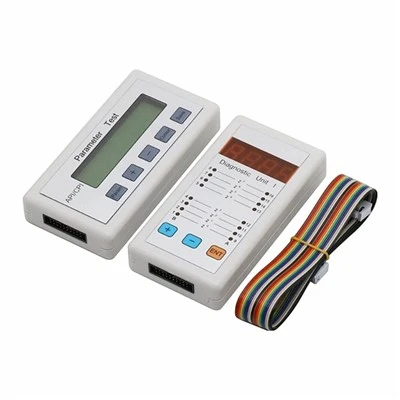
That’s it from me. Go swap parts safely, and hit us up whenever.
Elevator Parts for SJEC References:
National Elevator Industry Inc. (NEII) Best Practices for Cross-Brand Elevator Part Installation
UL 1028 Standard for Elevators and Escalators Safety Requirements
American Society of Mechanical Engineers (ASME) A17.1 Safety Code for Elevators and Escalators
Shaanxi Nona Elevator Parts Co., Ltd.
As one of the leading elevator parts manufacturers and suppliers in China, we warmly welcome you to wholesale bulk elevator parts in stock here from our factory. All elevator parts are with high quality and competitive price. For pricelist, contact us now.
Address: No.1502 Ronghao Building, Xi’an City, Shaanxi Province, China
E-mail: candice@nonaelevator.com
WebSite: https://www.nonaelevatorparts.com/
