If you’ve ever rummaged through a box of old electronics, you’ve probably come across a power strip that looks like it got caught in the crossfire of a renovation: one end has that bulky, three-prong plug, and the other has a two-prong adapter jammed in to fit an outlet that won’t take the third hole. As a power strip supplier, I’ve had this conversation with hundreds of customers—from college students cramming a laptop, mini-fridge, and space heater into a dorm outlet to small business owners setting up shop in an old office where the wiring hasn’t been updated since the 1980s. The question almost always comes back the same: do these multi-outlet power strips even need to be grounded? It’s not a trivial question, either—choosing the wrong strip can turn a small convenience into a fire hazard or worse, so let’s break this down the way I explain it to anyone who picks up the phone to ask. Multi-Outlet Power Strips
First, let’s get grounded (pun very intended) on what a ground actually does, because half the confusion comes from mixing up terms like “polarized plugs” and “grounded circuits.” In a standard residential or commercial electrical system, you have two live wires and one neutral wire, all running back to your home’s main electrical panel. The live wires carry the 120-volt current that powers your devices, the neutral wire sends that current back to the panel, and the ground wire is a safety feature that never carries current under normal circumstances. Its job is literally to ground stray electricity—any unexpected current that escapes from a device’s wiring, because of a frayed cord, a malfunctioning part, or even just a tiny spark from normal wear and tear. If that stray current has nowhere to go, it can travel through the metal casing of your power tool, your laptop, or your coffee maker, and if you touch that casing while standing on a floor that conducts electricity (like a wet bathroom floor or a concrete basement), you can get a dangerous, even fatal, shock.
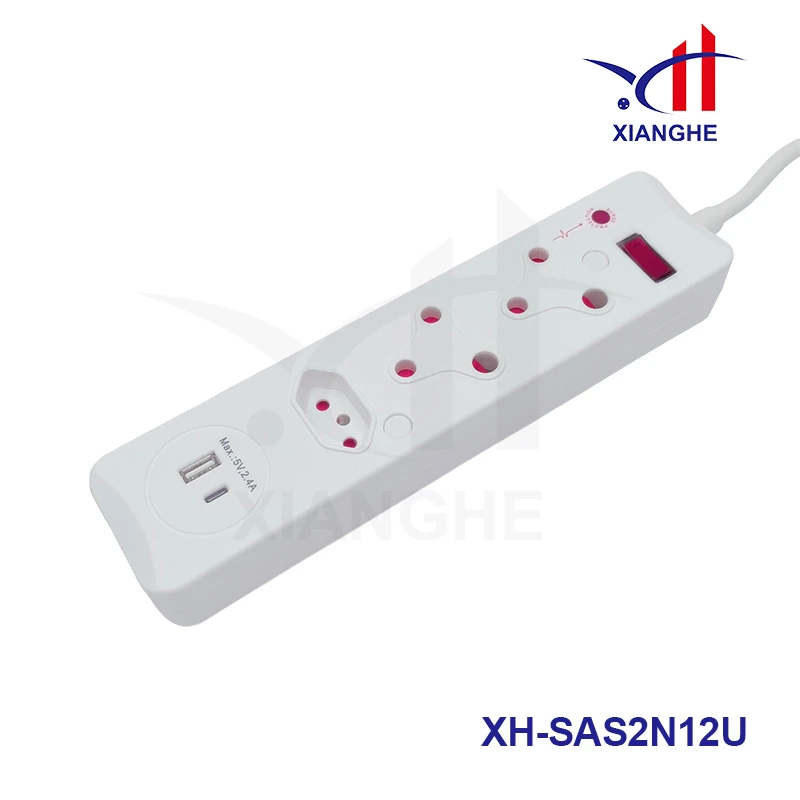
That’s where grounding comes in, and why it matters for multi-outlet strips specifically. Unlike a single extension cord that just carries power from Point A to Point B, a power strip is a hub—you’re plugging in devices with high draw (like space heaters, space heaters, or laser printers) next to small, sensitive ones like phones or smart speakers. A grounded power strip has a third prong that connects directly to that ground wire running through your building’s wiring, so if any of those devices have a current leak, it gets funneled straight back to the panel’s breaker, which trips and cuts power before anyone gets hurt. The catch here is that this only works if the strip itself is properly grounded, and the circuit it’s plugged into is grounded.
But here’s the part I have to be honest about: not all multi-outlet power strips are made equally. I’ve seen cheap, no-name strips sold at dollar stores that advertise “grounded” on the packaging, but when you open them up, they’re just two-prong internals with a fake third prong that’s not actually connected to anything. We’ve all seen those—plug them into a three-prong outlet, and the third hole on the strip doesn’t do a single thing. For my team here, that’s non-negotiable; every strip we manufacture has a solid metal ground bar that runs the entire length of the strip, so every single outlet on it is connected to that third pin on the plug. That’s not just a marketing line—it’s tested every single time before it leaves our warehouse.
Now, let’s talk about the common workaround everyone uses: the two-prong to three-prong adapter. I get it—older homes might only have two-prong outlets, and you don’t want to rewire your whole house just to plug in a new power strip. The problem here is that most adapters don’t actually connect the ground pin of the strip to anything. The adapter has a little metal tab that’s supposed to screw into the outlet’s ground screw, but half the time, that screw is loose, rusted, or just not installed in the first place. I’ve had customers tell me they screwed that tab into the outlet, only to have an electrician come by later and say that outlet’s ground is broken and doesn’t work anyway. So does that mean a grounded power strip is useless in a two-prong circuit? Not always, but it’s not doing the full job.
Let’s split this into two scenarios, because that’s how I coach my customers: when should you absolutely, positively use a grounded power strip, and when is it maybe okay to use a non-grounded one? First, any time you’re plugging in devices that are considered “high-risk” for electrical malfunctions. That includes anything with a metal casing, space heaters, power tools, space heaters, large appliances, or medical devices that run 24/7—like a CPAP machine, or a server in a home office. For these, a grounded power strip isn’t a luxury; it’s a requirement. The National Fire Protection Association (NFPA) has data that shows electrical malfunctions are a top cause of home fires, and ungrounded circuits or devices are a major contributing factor there. We had a customer a few years back who runs a small recording studio—he was using a cheap ungrounded strip to power his mixing board and monitor speakers. One day, a frayed wire on the mixing board caused a small current leak, and since the strip wasn’t grounded, the current traveled through the metal speaker stands, setting them on fire. He caught it in time, but he called us the next day and ordered a full set of grounded strips for every piece of equipment. That’s the kind of story that sticks with me, because it’s avoidable.
On the flip side, if you’re just using a power strip to plug in small, low-draw devices—like a lamp, a phone charger, a wireless router, or a tabletop fan—does the ground still matter? The risk here is much lower, because those devices don’t have high current loads, and a small leak might not be enough to cause a shock or a fire. But that doesn’t mean it’s a bad call to get a grounded strip anyway. For one thing, most modern devices are designed to work better with a grounded connection—they’re less likely to glitch, their components last longer, and you reduce the chance of damage from power surges. Speaking of surges, a lot of people mix up grounded strips and surge protectors, and they’re not the same thing. A surge protector has additional circuitry that diverts excess voltage from things like lightning strikes or faulty wiring, and most good surge protectors are grounded. If you want protection from power surges, you need both: a grounded power strip with surge protection, not just a non-grounded two-prong strip.
Another common question I get is: what about power strips used outdoors? I can’t stress this enough—outdoor power strips must be grounded, full stop. Outdoor settings are wet, which makes electricity much more conductive. If you have a light string, a fountain pump, or a power tool running on a patio, and the strip isn’t grounded, any stray current can travel through the wet ground and electrocute someone who steps in a puddle near it. We have a whole line of outdoor-rated grounded power strips that are weather-sealed to prevent water damage, and we don’t sell any non-grounded strips for outdoor use—ever.
I also want to address a myth I hear all the time: “I’ve been using ungrounded strips for 10 years and nothing bad has happened.” That’s true for a lot of people, but that’s like saying you never wear a seatbelt and never get in a car crash. It’s about risk mitigation. The older your wiring is, the more likely it is to have frayed wires or loose connections that can cause a current leak. If you live in an apartment building where the wiring isn’t regularly inspected, or if you have a home built before the 1970s, there’s a good chance your circuits are grounded, and a grounded power strip is there to add an extra layer of protection. For new homes, you might have grounded circuits, but you still want to make sure the strip you’re using is grounded to match.
As a power strip supplier, I also have to talk about safety certifications, because that’s the best way to tell if a strip is actually grounded, not just labeled as such. Look for UL certification, or the equivalent in your region. Underwriters Laboratories (UL) tests every part of a power strip—whether the ground connection is solid, how well it handles current loads, how it performs under stress—before it gets that label. If a strip doesn’t have a UL mark, don’t buy it, no matter how cheap it is. I’ve seen strips on Amazon or at discount stores that look identical to our products, but they skip the UL testing and just have a fake ground pin that doesn’t connect to anything. That’s false advertising, and it puts people at risk.
Let’s also talk about how to check if your power strip is actually grounded, because sometimes the packaging says one thing, but the inside is another. Flip the strip over and look for a small screw or a metal bar on the end where the plug is attached. If you see a solid metal bar running along the back of each outlet, that’s the ground connection. If it’s just empty plastic or two separate prongs with no metal connecting them, it’s not grounded. Another way is to use a circuit tester: plug the strip into a working three-prong outlet, and test each outlet on the strip. If the tester lights up to show the ground is working, then your strip is properly grounded. If not, it’s a dud.
Now, what if you live in a place with only two-prong outlets, and you can’t rewire your home right now? The safest workaround isn’t just plugging in an adapter. It’s to use a UL-listed two-prong grounded power strip, which is designed to work without a full ground connection but still has the ground circuitry built in to reduce risk for low-draw devices. Or, if you’re plugging in high-risk equipment like power tools or heaters, it’s worth the cost to hire a licensed electrician to update at least the outlets you use for those devices to be grounded. That’s a small investment compared to the cost of a fire or an injury.
I’ve been in this industry for 12 years now, and one thing that never changes is that customers always care most about keeping their family, their home, and their business safe. The question of whether multi-outlet power strips need to be grounded isn’t a yes or no answer—it’s a “it depends on what you’re plugging in, and how safe you want to be” answer. For high-risk devices, yes, absolutely. For low-risk devices, it’s a bonus layer of protection that’s worth the small extra cost. And for every single use case, make sure the strip is actually grounded, not just labeled.

At the end of the day, a power strip is supposed to make your life easier, not add another thing to worry about. That’s why we design every one of our strips with a solid, tested ground connection, and we stand behind that with our quality guarantee. If you’re not sure what kind of power strip is right for your space, or if you have questions about grounding for your specific needs, our team is here to help. Whether you’re a homeowner looking for a strip for your home office, a small business owner needing strips for your retail space, or an electrician working on a new build, we can walk you through the options and find the right solution for you. Don’t leave your safety to chance—reach out to our team today to learn more about our grounded multi-outlet power strips and how they can fit your needs.
Extension Cord Power Strips References
National Fire Protection Association. (2023). Electrical Fires in Residential Buildings. NFPA Journal.
Underwriters Laboratories. (2022). Standard for Safety for Power Strips and Adapters. UL 1363.
U.S. Consumer Product Safety Commission. (2021). Electrical Safety Tips for Multi-Outlet Devices. CPSC Consumer Advisory.
Hangzhou Xianghe Electric Appliance Co., Ltd.
Hangzhou Xianghe Electric Appliance Co., Ltd. is one of the most professional multi-outlet power strips manufacturers and suppliers in China. Please feel free to buy bulk advanced multi-outlet power strips made in China here from our factory. All customized products are with high quality and competitive price. Contact us for pricelist.
Address: South Industrial Zone, Meicheng Town, Jiande, Hangzhou City, Zhejiang Province, China
E-mail: xh@xianghe-electric.com
WebSite: https://www.xianghe-electric.com/
