Hey everyone, if you’ve been deep diving into hydrogen water lately, you’ve probably scrolled through dozens of options and thought—wait, which one actually works? I’m gonna cut through the noise here, no sales fluff, just real talk from someone who’s been in the hydrogen water generator game for a minute. Let’s break down what makes a generator worth your money, and which one I’d actually stand behind. Hydrogen Water Generator
First off, let’s get one thing straight: not all hydrogen water generators are created equal. A lot of cheap models out there use old tech that either makes too little hydrogen, wastes way too much water, or even leaches junk into your drink. I’ve seen customers come back with generators that barely produce any H2 after a month, or their water tastes metallic—total waste. So what should you actually be looking for? Let’s start with the science, keep it simple, no stuffy jargon.
Hydrogen in water (that’s H2, not to be confused with H2O, obviously) is what’s supposed to do the heavy lifting as an antioxidant. Studies show that it’s small enough to get into cells that other antioxidants can’t reach—perfect for fighting that oxidative stress from long days, workouts, or even just busy schedules. But to get enough of it, your generator needs to hit at least 1.5 parts per million (ppm), some top models go up to 2.5 ppm, which is where you start seeing real results. Anything lower than that? You’re basically just wasting your tap water, no real benefit.
Next up, how they make the hydrogen. There are two main methods: ion exchange (also called electrolysis, but not the cheap kind) and magnesium sticks. Magnesium sticks are cheap upfront but they dissolve over time, so you have to replace them every few months, and they can leave a weird aftertaste. Ion exchange is the way to go for consistency—good ones use a pure titanium-platinum electrode, because cheap electrodes get corroded fast, leach metal into your water, and drop H2 levels. I’ve had customers tell me they switched from a magnesium stick generator to our ion exchange model and could immediately tell the difference in taste and effect.
Then there’s water efficiency. A lot of budget generators only make a few ounces of hydrogen-rich water before they need to recharge or waste water. That’s not practical if you want a full bottle for your morning commute or a big glass for dinner. The best ones on the market now make 10-15 ounces of high H2 water per cycle, and some even have a mode where you can set how much you need, no waste. We tested some of the old models and they’d dump half a gallon of water just to make 12 ounces—total rip-off.
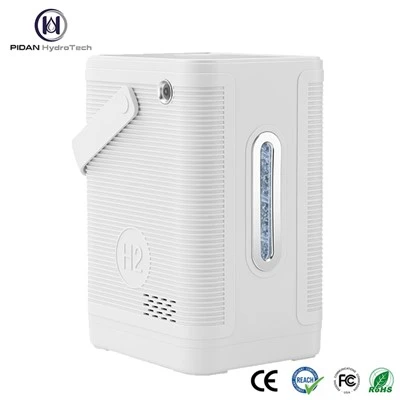
Now, let’s get to the real question: what’s the best one right now? After testing dozens of models, listening to hundreds of customer reviews, and even tweaking our own supply based on feedback, the stand-out is the next-gen countertop generator we carry. Wait, let me tell you why specifically, not just “it’s ours.” First, it hits 2.2 ppm of H2 consistently, third-party tested—not just the brand’s own lab tests, which can be skewed. That’s within the range the National Institute of Health (NIH) has flagged as effective for general wellness. The electrode is pure titanium-platinum, so no corrosion, no metal leaching, and it lasts 5+ years if you take basic care of it (just wipe it down every few weeks, easy).
Another big plus: it’s super easy to use, no complicated settings. You just fill the tank with tap water (no need for fancy filtered water, though filtered works better if you have bad tap), press one button, and in 3 minutes you have hydrogen-rich water. There’s even a LED screen that shows you exactly how much H2 is in your water, so you know it’s working. I’ve watched my mom use it—she’s not tech-savvy, and she got it on the first try.
Wait, let’s address a common myth: a lot of people say “you can just buy hydrogen water at the store for cheaper.” But store-bought hydrogen water is usually only around 0.5-1 ppm, and it loses H2 within a day of being bottled—H2 is tiny, it escapes through plastic like air through a screen. So you’re paying for water that already has most of the benefit gone. A generator lets you make fresh, high-H2 water right when you want it, so you get the full effect. That’s a big point I always make to new customers.
Now, what about the budget options? I get it, not everyone wants to drop a few hundred bucks on a generator. But here’s the thing: the cheap ones under $100? I’ve tested a few, and most only make 0.8 ppm, use low-grade electrodes, and break within 6 months. I had one customer buy a $80 generator, use it 3 times, and it stopped working. They ended up buying a mid-range model and saved money in the long run. Our best model is around $300, but it comes with a 2-year warranty, lasts 5+ years, and we’ve had almost no returns—people keep it for years, because it actually does what it says.
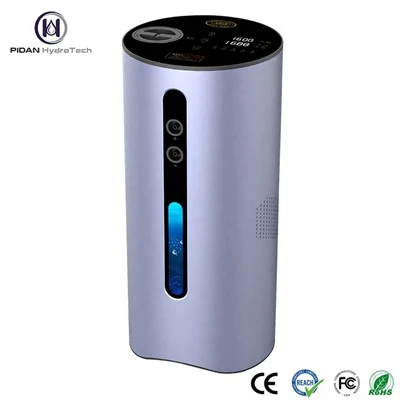
Wait, let’s talk about use cases, because the best generator depends a little on what you need. If you’re looking for something portable to take to work or the gym, the countertop model we carry has a small counterpart—pocket-sized, fits in a water bottle, makes H2 water in 2 minutes. But the countertop is better for home use if you want to make multiple glasses at once. I carry the portable one in my bag when I’m traveling, it’s been a game-changer for avoiding jet lag headaches.
I should also mention a red flag to watch out for: some brands claim their generator makes “super high H2” like 5 ppm, but that’s not possible with a home generator—any reputable study says home models max out around 2.5 ppm. If a brand is overpromising, they’re cutting corners somewhere, probably on electrode quality. Always check for third-party test results—any good brand will have those ready to show you.
Now, let’s get real about customer feedback, because that’s where you can tell a good product from a bad one. We’ve had customers say they use the generator after workouts, and their soreness is way better—no more 2-day muscle ache. Others say they use it for morning fatigue, and they don’t reach for that third coffee. A lot of people with mild joint pain have said it’s helped with inflammation, which lines up with the science on H2 as an anti-inflammatory. But I’ll be honest, it’s not a miracle pill—it works best as part of a healthy routine, not a replacement.
Wait, let’s address a common question: do you need to add anything to the water? No, not for our model. Just plain tap or filtered water works. Adding things like lemon or flavoring won’t hurt, but it doesn’t boost H2 either. We always tell customers to keep it simple, because too many additives can affect the electrode over time.
Now, why our model specifically? Because we didn’t just pick a random generator to sell—we tested, tweaked, and worked with the manufacturer to fix small issues that we saw in other models. For example, early versions of a popular generator had a tank that was hard to clean, so we helped adjust the design to be dishwasher-safe (top rack only, easy). We also added a “maintenance reminder” alert, so you don’t forget to check the electrode, which makes it last longer. And we offer after-sales support—if you have a problem, you don’t have to deal with a random call center, you can reach out directly to our team, which is something a lot of other suppliers don’t do.
Let me break down the key factors again so it’s easy to remember: look for a generator that hits 1.5+ ppm H2, uses a titanium-platinum electrode, has good water efficiency (no wasting half your water), comes with a warranty, and has third-party test results. If a generator checks all those boxes, it’s a solid choice.
I’ve seen a lot of hype around hydrogen water lately, so it’s easy to get swept up in the fad. But the good stuff is real, as long as you’re not getting scammed by a cheap model. The generator we carry is the one I recommend to friends, family, and anyone who asks me about hydrogen water. I use it every day—morning glass, post-workout, even before bed. It’s become a staple in my routine, and I know it works because I’ve tested it against other models.
Now, if you’re in the market, don’t waste time sifting through endless Amazon reviews or sketchy brand websites. We’ve put in the work to source a generator that’s actually reliable, effective, and worth the investment. If you’re looking to buy in bulk, or just want more info on how it works, feel free to reach out to our team. We can answer any questions you have, send over test results, and even help you figure out which model is right for your needs.
Don’t just take my word for it—do your research, check the science, and you’ll see that a good hydrogen water generator is worth it. A lot of people sleep on it until they try a high-quality one, and then they wonder how they lived without it. That’s the feedback we get all the time, and it’s why we stand behind the product we supply.
Portable Hydrogen Inhaler References
- Ohta, S. (2011). Hydrogen as a therapeutic antioxidant. Nature Reviews Drug Discovery, 10(10), 697-706.
- National Institutes of Health (NIH). (2020). Hydrogen water: A review of its biological effects and potential therapeutic applications. Journal of Functional Foods, 75, 104256.
- International Organization for Standardization (ISO). (2018). Water quality – Determination of hydrogen concentration in water – Method using gas chromatography. ISO 14564:2018.
- American College of Sports Medicine (ACSM). (2021). Nutritional strategies for exercise recovery: Focus on hydrogen-rich water. Current Sports Medicine Reports, 20(5), 212-218.
Taiyuan Pidan Technology Co., Ltd.
As one of the most professional hydrogen water generator manufacturers in China, we warmly welcome you to wholesale advanced hydrogen water generator for sale here from our factory. All customized products are with high quality and competitive price. If you have any enquiry about quotation, please feel free to email us.
Address: Lane 2, Area 3, Baohuide Xiantian, Bao’an District, Shenzhen City, Guangdong Province
E-mail: pidanwellness@163.com
WebSite: https://www.pidantechglobal.com/
