Hey everyone, if you’re here reading this, odds are you’re either shopping around for LED poster screens right now, or you’ve already seen one hanging at a mall, café, or grocery store and wondered how the heck someone updates that content without having to climb a ladder every time. Let me cut to the chase: as an LED poster screen supplier, this is one of the first questions I get from potential buyers—way before they ask about size, brightness, or weather resistance. “Do these things come with content management software? Because I’m not signing up for some confusing, overpriced tool that’ll take me weeks to figure out.” LED Poster Screen
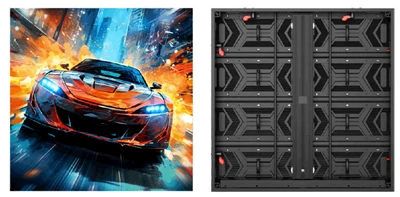
Short answer first: Most good LED poster screens do, but not all. And let’s be real—some of the stuff that passes for CMs (content management software) in this space is straight-up garbage. Today I’m breaking down what you actually need to know, from my side of the supplier desk, so you don’t waste time or money on a screen that’s just a fancy brick with a light-up frame.
Let’s start with the basics. What’s an LED poster screen, anyway? It’s that thin, sleek, poster-sized LED display—usually 27 inches up to like 55 inches, sometimes bigger depending on the setup—designed to replace static paper posters. You see them everywhere now: fast food spots changing their daily combo deals, gyms advertising new class schedules, even real estate offices rotating property listings. The whole point is that you can update your content instantly, no reprinting, no hanging new paper. But here’s the catch: none of that happens without a way to send your videos, images, text, or even live feeds like weather or social posts to the screen. That’s where the content management software comes in.
Now, why do some suppliers skip including it? Let’s be honest—cost. A lot of cheap, no-name suppliers overseas will sell you a super cheap LED screen, but they’ll charge you extra for the “management system” on top, or they’ll give you a clunky, outdated one that only works on a 5-year-old version of Windows and won’t let you upload anything larger than a JPEG. I see this all the time: a small business owner will call me, upset, saying “I bought a screen from [some random supplier] and they said the software was free, but it’s not, and it only works for one screen—if I buy a second, I have to pay another fee.” That’s a scam, full stop.
Here’s the other thing: not all content management software is built the same. As a supplier, we don’t just slap whatever free tool we find online onto our screens. We test three core things first: ease of use, functionality, and compatibility. Because if a café owner can’t figure out how to upload a new daily latte special on Monday morning before rush hour, the screen is useless. Let’s run through what a good included CMI (wait, no—CM for short, that’s what everyone calls it) should do.
First, it should work for multiple screen setups. Most businesses don’t just buy one LED poster screen at a time. A gym might want one by the front desk, one by the water fountain, one near the group studio. A retail store might have four by the checkout lines. A good CMI (there we go, CMI = content management interface, shorter) will let you manage all of those from one single dashboard. No logging into four different accounts, no sending files one at a time to each screen. That’s a huge pain point I hear all the time.
Second, it should be cloud-based, not local. Local software means you have to have a computer plugged into the screen 24/7, or only update content when you bring the computer to the screen. Cloud-based means you can log in from your phone, laptop, or even a tablet, anywhere with Wi-Fi. Last week I had a client who owns three coffee shops—she updated all three of her new pastry specials while sitting in the parking lot of her third shop in 2 minutes. That’s the kind of convenience you pay for, not a headache.
Third, it should support all the file types you actually use. I can’t tell you how many times someone has told me “I made a video for my sale and the software won’t play it, it only does MP4 and my video is MOV.” Or “I need to add a live countdown to my flash sale and the tool doesn’t have that feature.” A good included CMI lets you upload images, videos, GIFs, even live social media feeds if you want—like pulling your Instagram posts to display automatically. It should also let you schedule content, so if you’re a gym with 6 a.m. classes, you can set the schedule to switch from “6 a.m. Spin Class” at 5:50 a.m. to “8 a.m. Yoga Class” at 7:50 a.m. automatically. No one wants to be at work at 5 a.m. to change that.
Now, what about the fine print? Some suppliers will say “free CMI” but charge you for hosting. Wait, what? Hosting is just keeping the software connected to the screens so you can send content. If you have to pay monthly for that, that’s not free. That’s a hidden fee. As a supplier, I don’t do that. If our LED poster screens come with a CMI, that’s 100% included—no monthly subscriptions, no extra charges, ever. I get it, suppliers need to make money, but nickel-and-diming someone for basic functionality is garbage.
Another big question: what if you already have a piece of software you love? Like, a local café that uses a specific POS system that has its own content tool, or a school that uses Google Workspace to manage everything. Should you switch? Maybe not. That’s why a good LED poster screen should be compatible with third-party CMIs too. For example, if a client already uses SignageStudio or BrightSign, our screens work with those. You don’t have to use the one we provide if it doesn’t fit your workflow. That’s flexibility, and I think that’s non-negotiable.
Wait, let’s talk about edge cases. What if you’re in a place with no Wi-Fi? A lot of warehouses, outdoor events, or remote shops have spotty internet. A good CMI will work offline too. You can upload content when you have Wi-Fi, it stores on the screen’s internal memory, and it plays automatically even if the internet cuts out. Some cheap screens won’t do that—they’ll just stop working until the Wi-Fi comes back, which is useless for a lot of businesses. As a supplier, we test every screen’s offline functionality before we send it out, because we know that’s a dealbreaker for some clients.
Let me share a quick story to make this real. A few months back, I had a small boutique owner reach out to me. She’d bought an LED poster screen from a big box electronics brand—you know, the ones that sell everything from TVs to fridges. They’d told her it came with content management software, but when she got it home, the software required a $25/month subscription, didn’t support videos longer than 10 seconds, and only let her manage one screen (she’d bought two for her store front and back). She tried calling their support, waited on hold for 45 minutes, and no one could help. So she sent them back, and bought two of our screens instead. She uses our CMI, manages both screens from her phone, uploads 1-minute videos of her new clothing lines, and hasn’t paid a cent extra. That’s the kind of win I love to see.
Now, let’s clear up a myth: some people think “if it’s free, it’s bad,” and that’s sometimes true, but not always. A lot of the big, expensive CMIs are overcomplicated for small businesses. You don’t need to manage 100 screens, or have advanced analytics that tell you how many people looked at your content—most small businesses just need to update their poster when they have a new sale, that’s it. The CMIs we include with our screens are simple, no extra fluff, which is exactly what most people want.
Another thing to consider: support. If something goes wrong with the CMI—like you can’t log in, or a video won’t play—who do you call? A lot of cheap suppliers will send you an email address and ghost you. As an LED poster screen supplier, we have a 24/7 support team for our clients. If someone has an issue with the software, we get back to them within an hour, not a week. Because at the end of the day, the screen is only as good as the content you can put on it. If you can’t update it, it’s just a $500 paperweight.
Wait, what about when you scale? Let’s say you start with one screen, then add two, then five. Can the CMI handle that? A good included CMI will grow with you, no extra fees. Some tools cap the number of screens you can manage, which is annoying. For example, one tool might let you manage 2 screens for free, charge $10/month for 5 screens, $25/month for 10—we think that’s a ripoff. Our CMI lets you add as many screens as you want, no extra cost. Period.
Let’s recap what you should look for when buying an LED poster screen, specifically around content management software:
- Does the supplier include a CMI, or is it an extra? Avoid any supplier that charges you for it.
- Is it cloud-based, so you can update from anywhere? Local is so last decade for this use case.
- Does it support all the file types you need (videos, GIFs, long images, etc.)?
- Can you schedule content in advance? No more scrambling to update at 6 a.m.
- Can you manage multiple screens from one dashboard?
- Is it compatible with third-party tools if you already have a go-to CMI?
- Is there actual support if something breaks? No one wants to be stuck with a broken screen and no help.
Now, before you go, let’s talk about why this matters for your business. An LED poster screen isn’t just a fancy upgrade from paper. It’s a tool to save you money on reprinting posters, to update your promotions instantly, and to stand out in a crowded space. But if you’re stuck fighting with bad software, that tool becomes a waste of time and money.
I could go on about pixel pitch, brightness for outdoor use, or frame styles that match your store, but at the end of the day, the CMI is the heart of the whole thing. Without it, you can’t use the screen the way it’s meant to be used.
If you’re in the market for an LED poster screen, don’t just check the price tag. Ask the supplier straight up: “Does this come with content management software, and what does that include?” If they hem and haw, or try to charge you extra, keep looking. If they give you a clear, straightforward answer that covers all the points we talked about, you’re on the right track.
For what it’s worth, every LED poster screen we sell comes with our proprietary, cloud-based CMI that’s 100% free, no subscriptions, manage as many screens as you want, works on phones/laptops, supports every file type, lets you schedule content, and our support team is here whenever you need us. We’ve tested it for small cafes, gyms, retail stores, even small offices, and 9 out of 10 clients say it’s way simpler than any other tool they’ve tried.
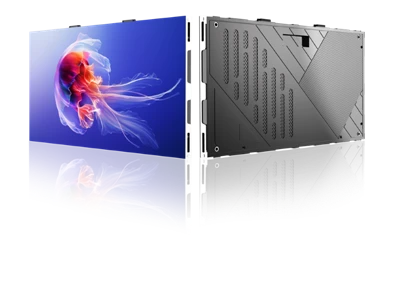
If you want to chat more, ask questions about specs, or get a quote for whatever size or setup you need, feel free to reach out. We’re here to help, not just sell you a screen that’ll end up collecting dust.
Indoor LED Display References
- Digital Signage Today. (2023). "Key Features to Look for in LED Poster Display Solutions for Small Businesses."
- SignageStats. (2024). "Content Management Software Adoption Rates for Retail LED Displays."
- International Sign Association. (2023). "Cost-Benefit Analysis of LED Poster Displays vs Static Posters for Small Businesses."
Suzhou One World Technology Co., Ltd.
With abundant experience, we are one of the most professional led poster screen manufacturers and suppliers in China. Please feel free to buy cheap led poster screen for sale here from our factory. All customized products are with high quality and competitive price.
Address: Room 928, No.28 Wansheng Street, Suzhou Industrial Park, Suzhou, Jiangsu Province
E-mail: sales@oneworldtech.cn
WebSite: https://www.yishitongtech.com/
