Hey there! If you’re a landlord, property manager, or someone who’s ever dealt with rental property upkeep, you know how fast entryways, hallways, and common areas can turn into a mess. Tracked-in dirt, mud, snow, coffee spills, even scuff marks from shoes don’t just make a place look messy—they lead to big cleaning bills, worn-out floors, and even tenant complaints. That’s where the right floor mat comes in, but with so many options out there, it’s easy to feel overwhelmed. I’m a floor mat supplier, and I’ve worked with dozens of rental property owners over the years, so today I’m breaking down exactly what makes a mat work for rentals (and what to skip). Let’s dive in. Floor Mat
First, let’s talk about why rental properties need a totally different mat than your home’s nice indoor rug. In a rental, you don’t have to deal with your own messy habits—you have to account for 5, 10, or 50 different tenants, all with different shoe styles, schedules, and levels of care. Tenants might not clean a mat as often as you would, tenants might drag heavy furniture across it, and if a mat gets ruined, you can’t afford to replace it every six months. Durability is non-negotiable here, and so is ease of cleaning. A mat that stays in good shape for years, not months, is the best investment you can make.
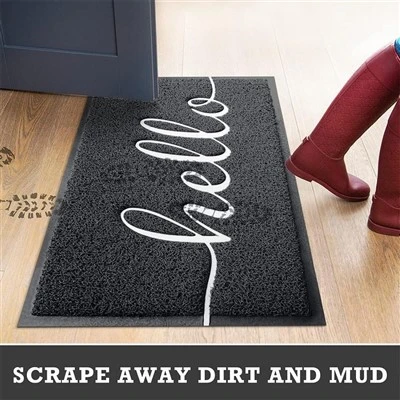
Let’s start with the most important area: the entryway. This is where 80% of the dirt from outside gets trapped, right? The wrong mat here will track mud through the unit, onto carpet, hardwood, or laminate floors, and that translates to extra work for your cleaning team (or more work for tenants, which leads to bad reviews). So what works for entryways in rentals? Hands down, high-profile, rubber-backed scraper mats with a heavy-duty nylon or polypropylene surface. Wait, let’s get specific—“high-profile” means the mat has raised ridges or bristles that actually scrape caked-on dirt and mud off shoe soles, not just brush it lightly. The rubber back is key because it won’t slide on tile or hardwood, no matter how many tenants walk over it.
I once had a property manager come to me last year with a problem: they bought cheap, thin fabric entry mats for their 10-unit apartment complex. Within three months, the mats were frayed at the edges, the rubber backing was peeling, and dirt was seeping through to the floor. Tenants were complaining about tracking mud all over their apartments, and the cleaning staff had to scrub the entryways twice a week instead of once. They switched to our commercial-grade scraper mats, and a year later, only two mats needed minor repairs, not replacements. That’s the kind of value you’re after. Also, skip the coir mats—they look nice at first, but coir sheds all over the place, and tenants hate vacuuming the constant fibers from their floors. Not a good fit for rentals.
Next, what about indoor entry mats or mats for hallways? Indoor mats are for trapping any leftover dirt the scraper mat missed, and for protecting indoor floors from scuffs. Again, not your grandma’s decorative cotton rug. The best indoor rental mats are low-profile, with a dense, looped polypropylene surface and a non-slip rubber base. Low-profile is important here because you don’t want a tripping hazard—hallways and entryways are high-traffic, and a thick mat is a liability for tenants (which means you could get sued if someone falls). Dense loops trap dirt, and polypropylene is stain-resistant—spill coffee or soda, you just wipe it up or toss it in the washing machine, no dry cleaning needed. Rubber backing stays put, even when kids run around or tenants move a couch over it.
Wait, some people like fabric mats indoors because they look nicer, but here’s the thing: fabric mats hold onto moisture and odors, and they can develop mold if they’re near a door that gets rainy. Tenants might clean them once a month, but if they’re damp under there, that’s a problem. The polypropylene rubber combo stays dry, is mold-resistant, and you can hose it off in the parking lot if it gets super dirty. Way easier for your cleaning staff.
Now, what about specific rental scenarios? Let’s break it down by property type, because a single-family rental is different from a multi-unit apartment, which is different from a commercial rental like a retail space or office.
For single-family rentals: Usually, you have a front door, maybe a back door leading to a yard, and possibly a patio area. You need something that’s durable but not too industrial-looking, because you don’t want the mat to clash with the house’s exterior. Our hybrid scraper mats—they have a durable rubber base but a woven, low-profile top that looks more like a nice outdoor rug than a construction mat—are perfect here. Tenants don’t mind the look, they last for 3+ years, and you can replace just one mat if it gets worn, not the whole set. Also, if your single-family rental has a back door leading to a backyard, add a smaller, waterproof mat there. Kids or pets might track in grass or mud, and that mat is cheap to replace if it gets ruined by a dog digging in the yard.
For multi-unit apartments or townhomes: High traffic is the name of the game here. You might have 100+ people coming and going every day, so mats need to hold up to constant foot traffic, maybe even rollerblades or wheelchairs. Heavy-duty, commercial-grade scraper mats with ribbed rubber surfaces are non-negotiable here. We also recommend adding a “mat rotation” program—every 6 months, swap the entry mats with the indoor hallway mats, so they wear evenly. That way, you don’t have to replace every mat at once, which saves you money. Another trick: for the main lobby area, a larger, custom-sized mat (instead of small ones that fit together) cuts down on tripping hazards and is easier to clean. No more gaps where dirt can get trapped between small mats.
What about commercial rentals, like small offices or retail spaces? The best mats here are anti-fatigue mats combined with dirt-trapping mats. Retail employees stand all day, so a mat that eases foot pain makes tenants (or your business tenants) happy, and the dirt-trapping layer keeps floors clean. Make sure the anti-fatigue mat has a non-slip base too—customers walking in with wet shoes won’t slip, which is a big safety win.
Now, let’s talk about what to absolutely avoid in rental mats, because I’ve seen too many landlords make these mistakes. First, cheap mats from big-box stores that cost $5-$10 each. They might seem like a steal at first, but they fray, slip, and get ruined in 6 months. That’s more money spent in the long run than buying a $25 mat that lasts 3 years. Second, decorative or “soft” mats—think shag rugs or cotton runners. They look nice, but they’re hard to clean, trap odors, and hold onto dirt so well it gets ground into floors. Tenants will complain about the mess, and you’ll pay for floor repairs. Third, mats without rubber backing. If a mat slides, that’s a tripping hazard. If a kid falls on a mat that slides into a tile, you could be on the hook for medical bills. Non-negotiable: every rental mat needs a non-slip rubber base. Fourth, doormats made from natural fibers like straw or seagrass. They shed, get moldy when wet, and break down quickly. Skip them.
Wait, another thing: stain resistance. Rental properties get spills—juice, coffee, paint, whatever. The mat you choose shouldn’t permanently stain, even if a tenant leaves a spill for a week. Polypropylene is the way to go here; it’s engineered to resist dyes and stains, so you can wipe most spills away with a damp cloth. If you’re working with hardwood floors, make sure the mat’s rubber backing doesn’t contain any vinyl or chemicals that can discolor the floor over time. We use a non-discoloring rubber in all our mats, so no more fighting with tenants over floor stains after they leave.
Let’s also talk about maintenance, because even the best mat won’t last if you don’t take care of it. For entry mats: every 2 weeks, shake them out (or hose them off if they’re outside) to get loose dirt out. For indoor mats: if they’re fabric (though we don’t recommend that for rentals), toss them in the washing machine every month. For our polypropylene mats, just wipe them down or hose them off, no washing machine needed. Also, check the edges every few months—if a mat starts to fray, you can trim the loose bits (or replace just that mat) before it becomes a bigger mess.
Now, here’s a question I get all the time: should I provide mats with the rental, or make tenants buy their own? From what I’ve seen, providing mats is a huge win. Tenants feel like you’re looking out for their space, they’re more likely to keep the entryway clean, and when they move out, the mats are yours—no waiting for a tenant to return a $10 mat that gets ruined. We’ve worked with property owners who tell us that providing mats cuts their cleaning time by 30% because there’s less dirt tracked into units. That’s a big savings when you’re managing multiple properties.
But if you’re hesitant to give mats away, or if tenants prefer their own (we have had a few that do), at least specify in the lease what kind of mat they can use. Say “non-slip, stain-resistant mat with rubber backing” so they don’t buy a cheap shag rug that turns into a mess. That way, you’re covered too.
Let’s wrap this up. The best floor mat for a rental property isn’t the cheapest one, or the nicest looking one—it’s one that’s durable, easy to clean, non-slip, and holds up to constant foot traffic. For entryways, go for heavy-duty scraper mats with high ridges and rubber backing. For indoor hallways, pick low-profile, looped polypropylene mats. For single-family rentals, hybrid mats that look nice but last. For multi-unit, commercial-grade mats with a rotation plan. And whatever you do, skip the cheap big-box mats, natural fiber mats, and decorative soft rugs—they’ll end up costing you more in the long run.
If you’re a property owner or manager looking to upgrade your rental mats, or you’re not sure what fits your specific property size, hit us up to chat. We can help you pick the right mats for your entryways, hallways, and common areas, no matter if you have a single-family home or a 50-unit apartment complex.
Automotive Mats References:
- International Facility Management Association. (2022). "Maintenance Best Practices for Commercial and Residential Floors." IFMA Global.
- National Multifamily Housing Council. (2021). "Cost-Saving Upgrades for Rental Property Common Areas." NMHC Research Report.
- ASTM International. (2020). "Standard Specification for Non-Slip Floor Mats for High-Traffic Areas." ASTM F1670-20.
- Residential Properties Council. (2022). "Tenant-Centric Upgrades That Reduce Turnover and Maintenance Costs." RPC Industry White Paper.
Cixi Mingsheng Rubber & Plastic Co., Ltd.
Cixi Mingsheng Rubber & Plastic Co., Ltd. is one of the most experienced floor mat manufacturers and suppliers in China, also supports customized service with competitive price. We warmly welcome you to buy bulk cheap floor mat from our factory. If you have any enquiry about quotation and free sample, please feel free to email us.
Address: No.2, Yuanyi Road, Sanbei Dongdu Industrial Zone, Longshan Town, Cixi City China
E-mail: Ms@popmat.com
WebSite: https://www.pobmat.com/
