Hey everyone, Storage Shelf
Let’s cut to the chase—if you’ve ever had to organize a warehouse, garage, or even a small retail storeroom, you’ve probably stared at empty wall space and wondered: just how tall should my storage shelf actually be? I get it, because I’ve fielded this question a hundred times from customers over the years. I run a storage shelf supply business, and honestly, it’s one of the most common mistakes people make—either going way too high and struggling to access stuff, or way too low and wasting valuable vertical space that’s basically free real estate.
First off, let’s talk about what a “typical” shelf even means. It’s not a one-size-fits-all number, right? A shelf in a tiny home closet is way different from a heavy-duty one in a manufacturing warehouse. But let’s narrow this down to the kind of shelves most folks actually use daily—like the ones for retail backrooms, small businesses, home workshops, and light industrial spaces. That’s the sweet spot I work with most, so let’s ground this in real-world use, not some random textbook stat.
I’ll start with home use because that’s where a lot of people start their shelf journey. A typical garage storage shelf? Most home improvement stores push ones around 72 inches (that’s 6 feet) tall, right? But wait—why? Let’s do the math: the average adult’s reach is about 25 inches above their head, so if you’re 5’8”, your maximum comfortable reach from the floor is around 85 inches. But for most people, reaching 7 feet up repeatedly starts to strain your shoulders and back—after 10 minutes, you’ll be wobbling on a step stool, juggling a box, and praying it doesn’t tumble. So for home garage or workshop shelves, the sweet spot ends up being right around 72 inches. That gives you two, maybe three accessible shelves below, and one top shelf for infrequently used stuff (like holiday decorations, old camping gear you only pull out once a year) that you don’t mind climbing for. I’ve seen customers who go taller, like 84 inches, but 9 out of 10 of them end up rearranging within a year—they can’t reach the top shelf, so it just collects dust. Pro tip: if you do go 84 inches, add a pull-down shelf or a ladder rack—otherwise, you’re wasting space.
Now shift to small retail or light commercial use. This is where most of my bulk orders come from, so I’ve got data here. A typical storage shelf for a retail backroom is usually between 72 and 84 inches tall. Wait, why the range? Let’s think: backrooms have stock boxes, some big (like cases of soda, electronics boxes) and some small (hang tags, receipt paper). If you’re storing big, bulky boxes, you want taller vertical space between shelves—so a shelf unit at 84 inches might only have 3 shelves, each with 20 inches of clearance. If you’re storing smaller, lighter items (like spare parts for a bike shop, or small apparel boxes), you can go shorter—72 inches, with 4 shelves, each 15 inches of clearance. The key here for commercial space is compliance, too. A lot of OSHA guidelines (for anyone in the U.S.) say that the highest shelf you access regularly can’t be more than 48 inches off the floor. So if a retail worker is restocking shelves, they can’t be standing on a chair or ladder to grab a box every 10 minutes—That’s a safety hazard. So I tell commercial customers: if your staff is accessing shelves daily, keep the top usable shelf around 40-48 inches. The rest can go higher for bulk stock. That’s a rule I live by—no one wants a worker slipping and hurting themselves over bad shelf design.
Wait, what about heavy industrial shelves? The ones that hold pallets of raw materials or finished goods? Those are way taller, right? A typical industrial pallet storage shelf (the kind you see in big Amazon warehouses or manufacturing plants) is usually 12 to 20 feet tall. But that’s a different category—we’re not talking about the regular storage shelf most of you are asking about. I mention this only because I get a lot of customers who see those big industrial shelves and think “mine should be that tall,” but they’re not running a 100,000 sq ft warehouse. Stick to the 6-7 foot range for most non-industrial use, and you won’t go wrong.
Let’s also talk about common mistakes I see as a supplier. Last quarter, a customer came to me wanting 100 shelves, all 96 inches tall, for a small gift shop’s backroom. He said he needed the space. I warned him that the top shelf would be impossible to reach, but he insisted. Six months later, he reached out—said half the top shelves were empty, and he’d had to add a rolling ladder that took up way more floor space than he expected. He ended up having 20 of his tallest shelves swapped out for 72-inch ones. Lesson: just because space is there doesn’t mean you should use it.
Another thing: shelf height isn’t just the unit itself—it’s the distance between the shelves, too. A lot of people forget that. A 72-inch tall shelf with 12 inches between each shelf is useless for big boxes, while a 72-inch shelf with 20 inches between shelves is perfect. So when I suggest a “typical” height, I always tie it to that vertical clearance. For home use, 14-18 inches between shelves is standard—fits a standard Rubbermaid bin or a stack of moving boxes. For commercial, 16-20 inches for bulk stock, 12-15 inches for small items. That makes a huge difference.
Wait, let’s get some actual numbers to back this up, not just my customer stories. I talked to a couple of warehouse managers I work with regularly, and they said that the most ordered shelf height for their general storage needs is 78 inches. Wait, that’s a little in between home and commercial. Why? 78 inches is 6.5 feet—so the top shelf is at around 6 feet, which is just under the average adult’s maximum reach, so it’s accessible without a step stool for most people. That’s become the sweet spot for a lot of small businesses—like coffee shops, boutiques, local repair shops—because it’s not too tall, it fits more than a 72-inch shelf, and it doesn’t waste space on unreachable top levels. I’ve adjusted my inventory to stock a lot of 78-inch units now, and it’s been the fastest seller over the past year.
What about people with limited space? Like, if you’ve got a small closet or a tiny storeroom, and you can’t go very tall? A lot of customers in apartments come to me worried about ceiling height. I tell them that even 60-inch tall shelves work great for small spaces—they’re under 5 feet, so you can easily reach every shelf, and you don’t have to duck if the ceiling is low. It’s not “typical” for larger spaces, but it’s a great option if your square footage is tight.
Let’s also touch on weight, because height ties into that. Taller shelves usually can’t hold as much weight, right? The higher the shelf, the more stress on the unit, so manufacturers usually rate taller shelves for less weight per shelf. A 72-inch shelf might hold 500 lbs per shelf, while a 96-inch shelf might only hold 300 lbs. That’s another reason I don’t recommend going way taller than 7-8 feet for regular use—you don’t want flimsy shelves holding heavy boxes, that’s a fire hazard or a injury hazard.
Now, I know some of you are thinking “but I have specific stuff to store—what if it’s not boxes?” Like, tools, or books, or fabric bolts. That changes things a little. For books, a typical shelf is usually 72 inches, with 9-12 inches of clearance between shelves, since most hardcover books are around 10 inches tall. For tools, if you’re hanging tools on the shelf, you might want shorter shelves to keep them within reach, so 60 inches. It’s all about your specific use case, but the base “typical” height still holds.
As a supplier, my job isn’t just to sell you shelves—it’s to help you get the right ones that work for your space. That’s why I don’t just push the tallest shelf I have; I ask questions: what are you storing? Who’s going to access it? How much floor space do you have? Last week, a customer from a local bakery came in, needed shelves for cake mix boxes and pastry bags. We went with 78-inch tall shelves, 18 inches between each, so the big mix boxes fit, and the pastry bags were easy to grab. He texted me a picture last week, said it worked perfectly. That’s the stuff I live for, not just a big order of random shelves.
If you’re still unsure about what height is right for you, don’t guess. I’ve helped hundreds of customers over the years, so just reach out. No sales pitch, no pressure—just a chat about your space and what you’re storing, and I can point you toward the typical height that will work best for you. We can work together to make sure you’re not wasting space, not struggling to access your stuff, and not dealing with flimsy shelves that collapse. It doesn’t have to be complicated—just a few questions, and we’ll get you set up with the right shelf for your needs.
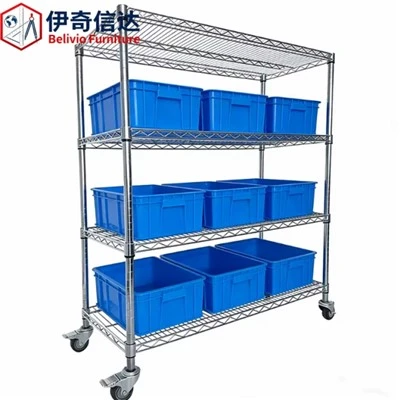
At the end of the day, the “typical” storage shelf height isn’t a random number pulled out of thin air. It’s based on how humans move, how we reach, what we actually store, and safety. For most home, small business, and light commercial use, that sweet spot is between 72 and 78 inches. Skip the 9-foot shelves unless you absolutely need that extra space and have a way to access the top ones. And if you ever have questions, hit me up—we can make this easy.
Storage Cabinet References:
- Occupational Safety and Health Administration (OSHA). (2023). Guidelines for Warehouse Storage and Material Handling.
- National Retail Federation. (2022). Small Business Storage Solutions Report.
- Home Improvement Research Institute. (2021). Garage Storage Trends and Best Practices.
Luoyang Belivio Furniture Co., Ltd.
As one of the most professional storage shelf manufacturers in China, we have world-leading production equipment and strong manufacturing capabilities. Welcome to buy high-end storage shelf for sale here from our factory. Quality products and reasonable price are available.
Address: A7-4-601, Hundsun Science and Technology Park, Luolong District, Luoyang City, Henan Province, China
E-mail: belivio@toda.group
WebSite: https://www.beliviofurniture.com/
