If you’re a commercial building owner, facilities manager, or HVAC technician, you’ve probably heard the terms “rooftop AC unit” and “commercial refrigeration unit” thrown around, often interchangeably. But here’s the thing: they’re not the same—and mixing them up can lead to sky-high energy bills, spoiled inventory, or even system failures. As a supplier of rooftop refrigeration units for commercial spaces, I’ve spent years walking clients through these differences, and I’m here to break them down like I do for every new customer who calls our shop. Rootop Refrigeration Unit
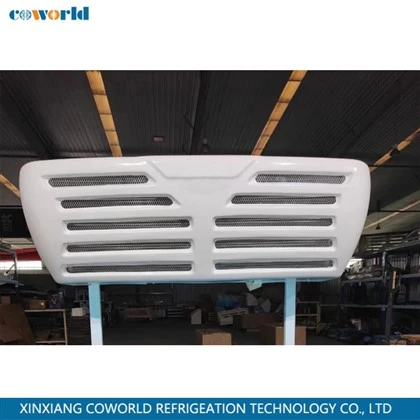
Let’s start with what each unit is designed to do, because that core function is where all the other differences stem. A rooftop AC unit’s job is simple: cool air to a specific, moderate temperature—usually between 65°F and 78°F (18°C to 25°C)—to keep building occupants comfortable. Think of an office building, a retail store with no food inventory, or a warehouse where people work regularly. These units move large volumes of air, filter it, and blow it through ductwork to maintain consistent indoor temperatures for humans.
A commercial refrigeration unit? Its purpose is way more precise and temperature-critical. It’s not there to keep people cool—it’s designed to store, preserve, and keep perishable goods at stable, extreme temperatures. That could be a grocery store’s walk-in freezer, a restaurant’s reach-in fridge for ingredients, a pharmaceutical warehouse storing vaccines, or a flower shop’s cooler keeping bouquets fresh. These units don’t just cool air—they maintain tight temperature ranges, often as low as -10°F (-23°C) for freezers or 34°F (1°C) for coolers, with little to no air movement needed for the space itself (the air is just a carrier for the cold to wrap around the products).
Now, let’s talk about system components, because that’s where the science gets tangible. Rooftop AC units rely on a standard vapor-compression cycle, but their key parts prioritize air volume over temperature stability. They have a large blower fan that pulls in hot indoor air, passes it over a refrigerant coil to absorb heat, then blows the cooled air back out through ducts. Their compressors are sized for moderate cooling loads, and they use refrigerant blends (like R-410A) that work well for mid-range temperatures. Most have simple thermostats that trigger the unit to turn on and off when the set temp is reached—no fine-tuning required.
Commercial refrigeration units, by contrast, have components built for extreme, consistent cooling. Their compressors are heavier-duty—often scroll or reciprocating compressors designed to run for hours on end without stopping, since a temperature swing of even a few degrees can spoil inventory. The refrigerant lines are thicker and insulated to prevent cold loss, and the evaporator coils are smaller and denser, meant to pull heat out of a closed, static space (like a walk-in freezer) instead of distributing air through a building. They also have specialty controls: digital temperature sensors that adjust the compressor speed in real time, defrost cycles to prevent ice buildup on coils (critical for freezers), and leak detectors to catch refrigerant loss before it ruins products.
Wait a second—you might be wondering, “Can’t I just use a rooftop AC for a small cooler in my café?” I get that impulse; it seems like a shortcut to save money. But here’s a real example I saw last year: a local coffee shop tried to use a 3-ton rooftop AC unit for their milk cooler, which was supposed to stay at 38°F. The AC unit would cycle on, cool the air to 36°F, then shut off—but the large blower would pull in warm air every time it turned back on, causing the temperature to jump to 45°F before the AC kicked in again. After just two weeks, 20 gallons of milk went sour, and the AC unit burned out because it was running too many cycles for a load it wasn’t designed to handle. That’s the risk of mixing these systems.
Energy use is another big difference, and it ties directly to their functions. Rooftop AC units use energy to move air, so their power consumption is tied to how big the space is and how often the door is open. A 10,000-square-foot office might use 10,000 kWh of AC energy a month, fluctuating with outside temperatures. Commercial refrigeration units use energy to maintain a consistent cold temperature, even when the space isn’t in use. A 1,000-square-foot walk-in freezer might use 15,000 kWh a month—more than the office—because it’s working 24/7 to fight heat seeping through walls and door gaskets. The inefficiency of using an AC unit for refrigeration doesn’t just cost you more electricity; it shortens the unit’s lifespan, too, because it’s not built for continuous heavy load.
Installation and placement also differ, even when they’re both on the roof. Rooftop AC units are usually mounted with a framework that connects to the building’s ductwork, so they need to be positioned where air can flow evenly through the building. They also need clearance around them for maintenance—your HVAC tech has to access the blower and coils easily. Commercial refrigeration rooftop units, though, are standalone (or connected only to a small cooler/freezer, not ductwork) and need more insulation around their casings to prevent cold loss. They also have dedicated space for condenser coils that are sized for low temps, and they often require a separate electrical panel because of their higher power needs. I’ve had clients try to skimp on that separate panel, only to blow out the building’s main circuit when the refrigeration unit starts up—another avoidable hassle.
Maintenance requirements? Let’s be real, that’s a make-or-break for commercial operators. Rooftop AC units need regular filter changes (every 1-3 months, depending on foot traffic), coil cleaning, and thermostat calibration. Missing a filter change can lead to dirty coils, reduced airflow, and higher energy use— but if you catch it early, it’s an easy fix. Commercial refrigeration units, though, have non-negotiable maintenance tasks to protect your inventory. Every month, you have to check door gaskets for leaks, test defrost cycles, and verify temperature sensors with a calibrated thermometer. If a refrigeration unit’s defrost cycle fails, ice builds up on the coils, blocking cold air and causing the compressor to overheat—often requiring a full replacement, not just a repair. Last quarter, a grocery store client came to us because their AC-style refrigeration unit had ice buildup, and they lost $8,000 in produce before they called. That’s why our service team always emphasizes the difference in maintenance needs before a sale.
So when should you choose which unit? If you’re cooling a space where people work, shop, or gather—an office, a gym, a retail store without perishables—a rooftop AC unit is the right pick. If you need to keep food, medicine, flowers, or other temperature-sensitive goods safe, you need a commercial refrigeration unit, specifically one designed for rooftop installation (which is what we specialize in).
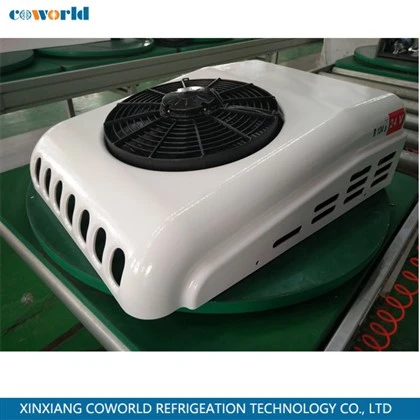
At the end of the day, mixing these two systems is a costly mistake. I’ve seen it ruin small businesses, cost retail chains thousands in lost inventory, and lead to unnecessary equipment replacements. That’s why we don’t just sell units—we help our clients figure out exactly what they need, whether that’s a compact rooftop refrigeration unit for a small bodega’s cooler or a large commercial system for a grocery chain’s walk-ins.
Rootop Refrigeration Unit If you’re not sure which unit is right for your commercial space, or if you’re looking to upgrade an old, inefficient system, we’re here to help. We work with businesses of all sizes, from local cafes to large warehouse operations, and we can tailor a rooftop refrigeration solution that fits your needs and budget. Reach out to us to start a conversation about your project—we’ll walk you through the options, answer your questions, and make sure you get a system that keeps your inventory safe and your energy costs low.
References
- American Society of Heating, Refrigerating and Air-Conditioning Engineers (ASHRAE). 2021. HVAC Applications Handbook.
- U.S. Energy Information Administration (EIA). 2022. Commercial Building Energy Consumption Survey.
- International Code Council (ICC). 2020. International Mechanical Code: Commercial Refrigeration Requirements.
- Air-Conditioning, Heating, and Refrigeration Institute (AHRI). 2023. Product Performance Standards for Rooftop Units and Commercial Refrigeration Systems.
Xinxiang Coworld Refrigeration Technology Co., Ltd.
As one of the most professional rootop refrigeration unit manufacturers and suppliers in China, our products have good reputation in the market. We warmly welcome you to buy cheap rootop refrigeration unit for sale here from our factory. If you have any enquiry about cooperation, please feel free to email us.
Address: B103 ROOM, GT CITY, NO.199 ZHENGZHONG ROAD, HIGH TECH ZONE, XINXIANG CITY, HENAN PROVINCE, CHINA
E-mail: coworldfrio@hotmail.com
WebSite: https://www.coworldthermo.com/
