If you’ve ever walked through a chemical processing plant, a water treatment facility, or a marine maintenance yard, you’ve probably spotted impellers tucked inside pumps, agitators, or mixers. For those of us who supply these critical components, one question comes up at least once a week: can impellers actually hold up in corrosive environments? It’s not a trivial question—corrosion doesn’t just wear out a part, it stops operations cold, adds thousands in unexpected maintenance costs, and even poses safety risks for teams working with harsh chemicals. As someone who’s been working as an impeller supplier for 12 years, I’ve seen too many operations run into avoidable failures because they skipped the right impeller material for their corrosive conditions. Let’s break this down plainly, no industry jargon that doesn’t need to be there, and share what we’ve learned from our clients across all kinds of tough, corrosive spaces. Impeller
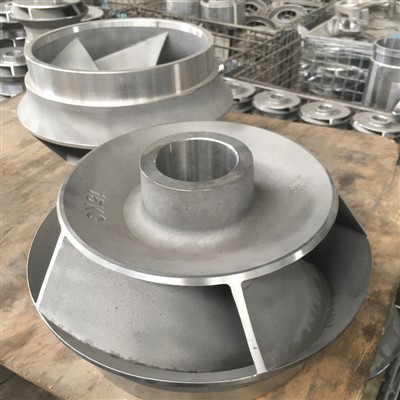
First, let’s define what we mean by a “corrosive environment” because it’s not one-size-fits-all. Corrosion for impellers isn’t just rust—though that’s a common issue with carbon steel parts. It’s a whole range of chemical reactions: acids like hydrochloric or sulfuric, bases like sodium hydroxide, saltwater (which causes pitting corrosion), even microbial corrosion from standing water in wastewater plants. Each of these eats away at impellers differently. For example, a carbon steel impeller left in a saltwater line will develop small pits within months, eventually breaking the impeller’s blades or hub mid-operation, leading to unplanned downtime. That’s not a “will it corrode” scenario—that’s a “when will it corrode” scenario for the wrong material.
So the short answer to the opening question is yes, impellers absolutely can be used in corrosive environments—if you choose the right material and apply the right design tweaks. The key here is matching the impeller to the specific corrosive agent it will face. Over the years, we’ve narrowed down the most reliable materials for these conditions, and each comes with its own set of pros and cons, depending on the application.
Let’s start with the most common material we recommend for mild to moderate corrosion: cast stainless steel. Specifically, 316 stainless steel, not the more common 304 grade. A lot of new clients come in asking for 304 because it’s cheaper, and it works great for everyday tasks like household appliances or mild water lines. But 304 doesn’t hold up to salt, dilute acids, or even some mild brines common in food processing. 316, on the other hand, has molybdenum added to its alloy, which creates a protective layer that resists pitting from chlorides. We supplied 316 impellers to a small seafood processing plant in Oregon two years ago; their old 304 impellers would rust through in their brine tanks every 8 months. The 316 parts we provided are still going strong three years later, even with daily exposure to saltwater and food-grade acids from fish processing.
But here’s the catch: even 316 stainless steel isn’t for heavy-duty corrosive environments. For operations handling concentrated sulfuric acid or strong alkaline solutions, we lean on duplex stainless steel. Duplex is a mix of austenitic and ferritic stainless steel, so it combines the strength of ferritic steel with the corrosion resistance of austenitic grades like 316. We installed duplex impellers at a chemical manufacturing plant in Texas last year, where their previous 316 parts failed within 10 weeks of running concentrated sulfuric acid. The duplex impellers have now gone 14 months without any signs of corrosion, and their maintenance team says they’re already saving $12,000 a year on replacement parts and unplanned repair labor. That’s the kind of payoff we talk about when we match the right material to the job.
For even harsher conditions, sometimes we turn to non-metallic impellers, and that’s where a lot of operations get skeptical. They think plastic or fiberglass parts are too flimsy, right? But modern non-metallic impellers are nothing like the cheap plastic toys you had as a kid. For example, high-density polyethylene (HDPE) or polyvinylidene fluoride (PVDF) impellers are designed to handle some of the most aggressive chemicals around—hydrofluoric acid, strong bleaches, even solvents that would eat through stainless steel. A wastewater treatment client in Arizona switched to PVDF impellers for their chemical feed pumps four years ago; before that, their stainless parts would corrode so badly they’d leave tiny metal shavings in the treated water, which violated their regulatory permits. The PVDF parts don’t corrode, and they’ve never had a permit issue since. The only downside with non-metallics is that they can’t handle temperatures above 250 degrees Fahrenheit, and they’re not as strong as metal impellers for high-pressure applications. That’s why we always ask clients to share not just what chemicals they’re using, but also the operating temperature and pressure before we recommend a material.
We also offer lined impellers, which are a middle ground for clients who want the strength of metal but the corrosion resistance of non-metallic material. These are metal impellers (usually cast iron or carbon steel) lined with a thick layer of rubber or fluoropolymer. The liner acts as a barrier between the metal and the corrosive fluid. We used lined impellers for a mining operation in Canada that uses acidic slurry to process ore; the slurry is so acidic that even duplex stainless steel would corrode through in 6 weeks. The lined impellers we provided have lasted over a year, and the mine’s team says they’re way cheaper than replacing impellers every couple of months. The trick with lined impellers is making sure the liner is applied correctly—if there’s even a tiny bubble or gap, the corrosive fluid will seep under the liner and cause the metal to corrode from the inside out. That’s why we only work with vendors that have 20+ years of experience applying these liners, and we do a 100% pressure test on every lined impeller before it leaves our facility.
Beyond material choice, there are two design tweaks we swear by for making impellers more corrosion-resistant, even in tough environments. First, flow rate design. If an impeller is designed to push fluid too fast, it can cause cavitation—small bubbles forming and collapsing on the blade surface, which erodes the material over time, creating tiny holes that corrosive agents can get into. We work closely with clients to adjust impeller blade angles and sizes to match their exact flow requirements, so there’s minimal cavitation. Second, surface finish. A rough impeller surface is way more prone to corrosion than a smooth one, because corrosive particles can get stuck in the rough crevices. That’s why we machine all our impellers to a 125-grit or smoother finish, and for corrosion-critical parts, we do a chemical passivation process to remove any free iron from the surface, which prevents rust from forming.
Now, let’s talk about the mistakes we see clients make all the time when selecting impellers for corrosive environments. The biggest one is “cutting corners on price.” A client once came to us with a quote for a 304 stainless impeller that was half the price of a 316 one. He told us he only needed it for a mild saltwater line, and thought “stainless is stainless, right?” We warned him it would only last 6 months, but he went with the cheaper option. Six months later, he was back, having to replace his entire pump because the corroded impeller had broken off and damaged the pump casing. He ended up paying three times the cost of the original 316 impeller in repairs alone. That’s a mistake we hate to see, and it’s why we always take the time to walk through a client’s exact application, no matter how “simple” it seems.
Another common mistake is assuming all corrosive environments are the same. A food processing plant handling dilute citric acid is a totally different environment than a chemical plant handling concentrated sulfuric acid. We once had a client who used the same impeller for their beverage line (mild acid) and their cleaning line (strong alkaline solution). The 316 impeller worked great for the beverage line, but the alkaline solution corroded it within 3 months. We switched them to a duplex impeller for the cleaning line, and now they only need one type of impeller for each area, no cross-contamination or corrosion issues.
We also work with clients who are retrofitting existing equipment, so they don’t have to replace their entire pump or mixer to get a corrosion-resistant impeller. A lot of people think they need to buy a whole new unit, but that’s not true—most pumps and mixers can be modified with a new impeller, as long as the shaft size and mounting holes match. That’s saved our clients thousands of dollars, especially when they’re dealing with tight maintenance budgets.
If you’re running a facility in a corrosive environment, how do you know if your current impeller is the right one? Look for a few red flags: rust or pitting on the impeller blades or hub, unusual vibrations from your pump or mixer (which can be a sign of a corroded impeller throwing off balance), or higher than usual maintenance costs for impeller replacements. If you’re seeing any of these, it’s probably time to switch to a more corrosion-resistant material. And if you’re not sure, reach out—we’re happy to walk through your application and give a free recommendation, no pressure to buy anything right away.
At the end of the day, impellers can absolutely be used in corrosive environments—you just need to pick the right material, get the right design, and avoid the common mistakes that lead to premature failure. For us as impeller suppliers, it’s not just about selling a part—it’s about making sure our clients’ operations run smoothly, safely, and without unexpected downtime. We’ve worked with everything from small wastewater plants to large chemical manufacturing facilities, and we’ve seen firsthand that the right impeller can turn a costly, problematic corrosive environment into something manageable.

If you’re currently dealing with impeller corrosion in your facility, or if you’re planning to upgrade to a more corrosion-resistant setup, we’re here to help. We can walk through your specific application, share the right materials and design tweaks, and provide a tailored solution that fits your needs and budget. Don’t let corroded impellers derail your operations—reach out to our team to start a conversation about your requirements today.
Impeller References
- ASME B73.1-2018, Specification for Horizontal End Suction Centrifugal Pumps for Chemical Process, American Society of Mechanical Engineers.
- Jones, D. A. (1996). Principles and Prevention of Corrosion, 2nd Edition, Prentice Hall.
- Duplex Stainless Steel Association. (2020). Duplex Stainless Steels for Corrosive Industrial Applications, Technical Report DSS-TR-002.
- PVC Industry Association. (2019). Non-Metallic Impellers for Chemical Processing Equipment, Best Practices Guide.
Shandong Shunye Stainless Steel Co., Ltd.
Shandong Shunye Stainless Steel Co., Ltd. is one of the most professional impeller manufacturers and suppliers in China, also supports customized service. Welcome to buy bulk cheap impeller made in China here and get quotation from our factory. For price consultation, contact us.
Address: Shandong Province, Binzhou City, Wudi County, Liubao Town, Zhangdong Road, Duliucun Village
E-mail: sales@wdshunye.com
WebSite: https://www.shunyecasting.com/
