If you’re a homeowner, electrician, or even someone who dabbles in small DIY electrical projects, you’ve probably stared at a circuit breaker in your electrical panel at some point. And if you’re working on a lighting circuit—whether it’s rewiring a bedroom, adding outdoor patio lights, or updating a commercial office’s lighting setup—you might have wondered: Can a circuit breaker be used in a lighting circuit? Circuit Breaker
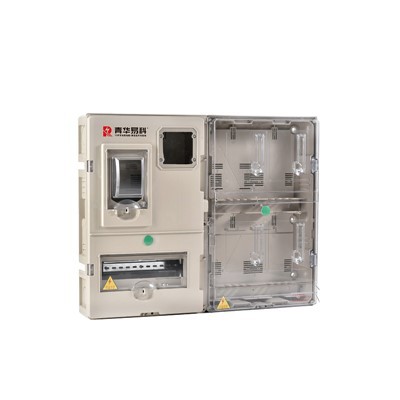
As someone who’s spent the last 12 years supplying circuit breakers to electricians, contractors, and residential suppliers, I get this question all the time. It’s not a “yes” or “no” answer—there’s a lot of nuance here, from how lighting circuits work to what a circuit breaker actually does, and even which type is best for the job. Let’s break this down like I would over a cup of coffee with a fellow electrician, no stuffy textbook jargon, just real-world experience.
First, let’s start with the basics: What’s a lighting circuit, and how does it differ from other circuits in your home or building? A standard residential lighting circuit is a 15-amp or 20-amp circuit, usually run with 14-gauge or 12-gauge copper wire, respectively. Its sole job is to power light fixtures, switches, and sometimes small plug loads in hallways or bedrooms. Unlike a kitchen circuit, which handles ovens and dishwashers, or a laundry circuit for dryers, lighting circuits are low-load—most residential lighting only draws a few amps, even with multiple LED fixtures. But here’s the thing: Even with low loads, lighting circuits need protection against overheating, short circuits, and overloads. That’s where circuit breakers come in.
Wait, you might be thinking—can’t I just use a regular fuse for a lighting circuit? Fuses work, but circuit breakers are way more practical for modern setups. A fuse is a one-time use device: when it blows, you have to replace the whole thing. A circuit breaker trips when it detects a fault, and once the issue is fixed (unplugging a faulty fixture, tightening a loose wire), you can flip it back on. That’s a huge win for anyone who’s ever had a fuse blow mid-project or in the middle of the night.
But let’s get specific: Can every circuit breaker work in a lighting circuit? No, not exactly. Let’s talk about the two main types of circuit breakers that get used for lighting: standard thermal-magnetic breakers, and AFCI (Arc Fault Circuit Interrupter) breakers.
First, the standard thermal-magnetic breaker—this is the most common type you’ll find in any electrical panel, and it’s definitely compatible with lighting circuits. Thermal-magnetic breakers have two parts: a thermal component that trips on slow overloads (like a circuit with too many fixtures pulling extra power over time) and a magnetic component that trips almost instantly on short circuits (like if a frayed wire touches the metal junction box). For a basic lighting circuit, a 15-amp or 20-amp standard breaker is perfect. I’ve supplied these to residential contractors for decades, and they’ve worked flawlessly for everything from recessed kitchen lights to outdoor garden lighting setups.
But here’s where it gets interesting: NEC (National Electrical Code) requirements. Starting in the mid-2000s, the NEC updated its rules to require AFCI breakers in most residential lighting circuits. Why? Because arcing faults—small, unintended sparks that happen when wires are loose, insulation wears down, or connections are faulty—are a leading cause of residential electrical fires. A standard thermal-magnetic breaker won’t trip for a small arcing fault because it doesn’t draw enough current to trigger the overload or short circuit protection. An AFCI breaker, though, is designed to detect those tiny arc sparks and shut off power before they cause a fire.
This is something a lot of people miss when they’re choosing breakers for lighting. A few years back, a customer came to me with a problem: he’d wired a new lighting circuit in his basement with standard breakers, and a year later, a loose wire in a light fixture caused a small arc that started melting the insulation—luckily, his smoke alarm went off before anything worse happened. He didn’t know about NEC’s AFCI requirements, and that mistake cost him a few hours of rework. Now, every time I talk to a new electrician, I remind them: if you’re working on a residential lighting circuit in the U.S., AFCI breakers are non-negotiable. For commercial lighting circuits, the rules are a bit different, but you’ll still want a breaker that handles arc fault protection if the space has occupied areas.
Wait, but what about LED lighting? A lot of people ask me if LED’s lower power draw changes anything here. Let’s be clear: LED fixtures are more energy-efficient, so a 15-amp lighting circuit can handle way more fixtures than it used to with incandescents. But that doesn’t mean you can skip the breaker protection. Even with 10 LED fixtures drawing 5 watts each (total 50 watts, which is less than 0.5 amps), you still need a breaker to protect the wire. The wire itself is the weak point here—if a 14-gauge wire is run too close to a heat source, or if it’s damaged during installation, a breaker will shut off power before the wire overheats and starts a fire.
Another common question: Can I use a higher amp breaker for a lighting circuit to add more fixtures? Let’s say you have 14-gauge wire, which is rated for 15 amps. If you put a 20-amp breaker on that circuit, you might be able to run more fixtures, but it’s a huge safety risk. The wire is only rated to handle 15 amps continuously, so a 20-amp breaker won’t trip if the wire is overloaded—meaning the wire could overheat and melt insulation, causing a short. I’ve seen this mistake so many times, especially with people trying to add lots of string lights or outdoor fixtures. The breaker has to match the wire gauge, not just the total wattage of the fixtures. For 14-gauge, stick with 15-amp breakers; 12-gauge goes with 20-amp breakers. That’s a rule I’ve never broken in 12 years of supplying breakers.
What about special lighting circuits, like for a gallery with accent lights, or a retail store’s display lighting? In those cases, you might need a breaker with a different feature—like a branch circuit breaker with a ground fault protection (GFCI) for outdoor lighting near pools or walkways. Wait, GFCI breakers are great for wet locations, right? If your lighting circuit is near a water source (like a patio with a pond light, or a hallway near a bathroom), a GFCI breaker will shut off power if there’s a ground fault, which prevents electric shock. That’s a perfect use case for a circuit breaker in a lighting circuit where water is a risk.
Now, let’s talk about how circuit breakers are installed in lighting circuits. Unlike a main breaker, which is big and handles the entire panel, lighting circuit breakers are branch breakers, so they slot into the main panel’s breaker slots. You’ll wire the breaker to the hot wire (black) from the circuit, load it to the switch or fixture, and the neutral wire (white) connects to the panel’s neutral bus bar. This is a standard install, but it’s critical to make sure the breaker is rated for your panel—most residential panels use 1-inch breakers, but some older panels take 2-inch, so you have to check before ordering.
As a supplier, I’ve also noticed a trend in smart home lighting systems. More and more customers are asking for smart breakers that can be controlled via an app for their lighting circuits. A smart circuit breaker works exactly like a standard AFCI or thermal-magnetic breaker, but it adds Wi-Fi or Bluetooth connectivity so you can turn lights on/off remotely, set schedules, and get alerts if a fault is detected. This is a great option for homeowners who want convenience, and it’s still 100% compliant with NEC rules for lighting circuits. I’ve supplied smart breakers to customers who added whole-home lighting control, and they love being able to turn off all the lights from bed when they forget.
But let’s address a common myth: some people think circuit breakers are only for big appliances, not lighting. That’s the opposite of the truth. Lighting circuits are actually one of the most common places where electrical faults happen, because they’re run in walls, attics, and basements where wires can be damaged over time. A circuit breaker is your first line of defense against those faults. Without a breaker, a bad connection in a light fixture could cause a fire before anyone even notices something is wrong.
Now, if you’re an electrician or a contractor reading this, you know that getting the right breaker for a job is half the battle. Too many breakers on the market are cheap imports that don’t meet NEC standards, and I’ve had customers come to me after using those—they tripped incorrectly, or didn’t detect arcs, leading to callback jobs. That’s why I focus on supplying breakers that are UL-listed, which means they’ve been tested to meet safety standards for lighting and other circuits. For any lighting circuit, whether residential or commercial, a UL-listed breaker is non-negotiable.
Let’s wrap this up: Yes, a circuit breaker absolutely can and should be used in a lighting circuit. The key is choosing the right type: UL-listed thermal-magnetic for basic circuits, AFCI for residential circuits per NEC rules, GFCI for wet locations, and even smart breakers if you want extra convenience. Always match the breaker’s amp rating to your wire gauge, and never use a higher amp breaker than your wire is rated for. The biggest mistake I see is people skipping AFCI breakers because they think they’re unnecessary—don’t do that. A few extra dollars for a UL-listed breaker will save you from a lot of trouble down the line.
If you’re working on a lighting circuit right now and need the right breaker, don’t guess at it. I’ve helped hundreds of electricians and contractors pick the perfect breaker for their specific project, whether it’s a 15-amp residential bedroom circuit, a 20-amp commercial retail lighting setup, or an outdoor patio circuit near a pool. Reach out to my team to chat through your needs—we’ll make sure you get the right product, no hidden fees, and the technical support you need to get the job done safely.
Circuit Breaker Box References
National Electrical Code (NEC) 2023 Article 210.12 (Arc-Fault Circuit-Interrupter Protection for Branch Circuits)
Underwriters Laboratories (UL) Standard 489 for Molded-Case Circuit Breakers
Electrical Safety Foundation International (ESFI) “Arc Fault Circuit Interrupters: A Guide for Electricians”
Shandong Qinghua Yike Electric Co., Ltd.
Address: No. 378 Taozhuang Village, Zaoyuan Town, Lanshan District, Linyi City, Shandong Province
E-mail: admin@sd-qhyk.com
WebSite: https://www.qhecobox.com/
