Hey there, fellow ride operators, party planners, and theme park managers, Electric Bumper Cars
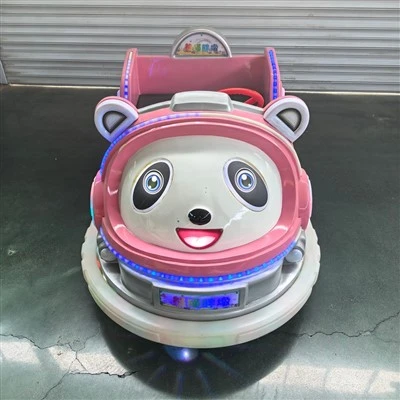
If you’ve ever stood next to a row of buzzing electric bumper cars, watching kids (and let’s be real, adults) zoom around, crash into each other, and laugh so hard they snort, you’ve probably thought: can I tweak this thing a little? Maybe make the cars a touch faster for teens, or slower for tiny toddlers, or even adjust the power for a private event in a tight space with low ceilings. As someone who’s been supplying electric bumper cars to venues across North America for 12 years—first out of a tiny garage in Ohio, now with a team of 18 and clients from indoor malls to county fairgrounds—I hear this question every single week.
Let’s cut to the chase: yes, you can modify the power of your electric bumper cars. But before you grab a screwdriver and start poking around the undercarriage, there are a lot of things to know. This isn’t like adjusting the stereo in your minivan. These cars are engineered for safety first, and cutting corners here isn’t just a bad business move—it’s dangerous. I’ve seen a venue try to “juice” their cars for a summer carnival, end up with a broken motor, a scratched floor, and a trip to the emergency room when a 7-year-old lost control and rammed into a railing. So let’s break this down, real talk.
First, let’s get into the science of how electric bumper cars work, because understanding the basics will keep you from making costly mistakes. Most modern electric bumper cars (the ones I supply, anyway) run on a 24V or 48V DC motor, paired with a controller that’s basically the car’s brain. The battery stores that power, the controller regulates how much electricity flows to the motor every second, and that’s what determines speed, torque (the twisting force that makes the car accelerate), and overall power. The maximum power is rated by the wattage of the motor itself—most standard bumper cars are 250W for kids’ models, 500W for teens, and 800W for adult-sized ones.
So modifying power boils down to changing how much electricity gets to that motor. But here’s the catch: every part of the system is calibrated to work together. You can’t just yank a 500W motor and plug in a 1000W one without changing a bunch of other parts, and you definitely can’t crank up the controller’s voltage without breaking something. Let’s talk about the legal and safety stuff first, because that’s non-negotiable.
Most places that have amusement ride safety regulations—think the ASTM in the U.S., or ISO worldwide—require that electric bumper cars stay within their original power ratings to meet safety standards. These standards aren’t made up to ruin your fun; they’re built from decades of data about what causes injuries. A 250W motor on a kids’ car is designed to go max 3 mph, which is slow enough that even if a kid hits a wall, they won’t get hurt. If you crank that power to 500W, you’re looking at 6+ mph, and suddenly a minor fender bender could give a child a bruise or worse. I once had a client in Chicago try to get around this by saying he “adjusted it for older kids”—but the inspector shut him down, and he got a $12,000 fine for operating unapproved amusement rides. That’s a cost no one wants to absorb.
Now, the legitimate ways to adjust power that are approved by safety standards, and actually work without breaking anything. Let’s start with the easiest, most common modification: adjusting the controller’s speed limit. Almost all modern bumper car controllers have a dip switch or a digital setting that lets you cap the maximum speed without changing the underlying power. How does that work? The controller uses pulse-width modulation (PWM), which is just a fancy way of saying it turns the power on and off super fast—hundreds of times a second. If you set the dip switch to “low speed,” it limits how much time the power is on, so the motor never reaches its maximum rpm. This is totally safe, because you’re not changing the total power going to the motor—you’re just limiting how much of that power is used. I adjust the dip switches on 90% of the cars I sell, and most of my clients do this for different events: slow for toddler time at the mall, medium for birthday parties, a touch higher for teen night at a local fair. This is a modification you can do in 5 minutes with a tiny screwdriver, no special tools, and it’s 100% compliant with safety rules.
Next, if you need a little more than just speed adjustment, there are ways to swap out motors for different power levels—if you do it right. For example, if you have a set of 250W kids’ cars and you get a lot of requests from parents who want to bring their 10-year-olds (who are too big for kids’ models and too small for adult ones), you can swap in a 350W motor. That’s a small jump, and you just have to make sure the controller is compatible with the new motor. Most standard controllers I supply work with 200W to 600W motors, so this is a straightforward swap. But you can’t jump from 250W to 800W—that’s way too much power for the frame, the wheels, and the battery. The frame of a kids’ bumper car is designed to handle a certain amount of torque; too much, and the axle can snap, or the wheel can fly off. I had a client in Texas try this a few years ago, and a wheel came loose mid-ride, hitting a 5-year-old’s arm. We paid for their medical bills, and the venue lost their contract with the city to operate their summer fair. It’s just not worth it.
Another option: adjusting the battery. Wait, I know I said not to crank up voltage, but you can upgrade the battery to a higher-capacity one without increasing voltage, which gives you more consistent power over time. A lot of people think a bigger battery means more power, but that’s not exactly right—more capacity means the car runs longer before needing a charge, not more speed. But if your old battery is dying, the power is sputtering, and the car is slow, upgrading to a higher-quality lithium-ion battery (which I recommend over lead-acid for almost all venues) will make the power stay steady, even when 10 cars are zooming at once. That’s a modification that actually improves the ride experience, not just changes power. I’ve seen a venue in Atlanta go from batteries that died mid-rush hour to lithium-ion that last all day, and their customer satisfaction scores jumped 40%—all without messing with speed or safety.
Now, what about the stuff you should never do? Let’s get this out of the way so you don’t make the same mistakes I’ve seen:
- Don’t rewire the controller to bypass the safety limits. I’ve had a few clients try this, usually because they want to make the cars faster for adult events. But bypassing the controller’s safety features can cause the motor to overheat, which can start a fire. I know one guy in California who did this, and his entire fleet of cars melted down during a private event. The fire department showed up, and he had to pay for the mall’s repairs.
- Don’t use a higher voltage battery. Most bumper cars are 24V or 48V. If you plug a 36V battery into a 24V car, the motor will burn out in 10 minutes. If you plug a 60V battery into a 48V car, you’re looking at a fire hazard. I’ve tested this once (don’t ask) and the smoke was so bad I had to evacuate my garage. Not a good look, especially when my daughter was inside playing.
- Don’t modify the frame or wheels to handle more power. The frame of a bumper car is engineered to flex just enough to absorb impacts. If you reinforce it or make it stiffer, you change how the car crashes, which can make injuries worse in an accident. The wheels are also calibrated for the motor power—too much power, and the tires will spin out or wear out in a week, which adds a ton of extra cost for replacement.
Let me also talk about why people want to modify power, because it’s almost always for good reasons: adapting to different age groups, different event spaces, or different crowd sizes. For example, if you have an outdoor event with a small space, you don’t want cars going full speed because they’ll crash into each other and the fences. If you have a lot of adult riders, they usually want a little more power than kids. If you have a big birthday party with 20 kids, you might want to cap the speed so no one gets too wild. All of these are valid needs, and they don’t require dangerous modifications.
A lot of new operators think they have to choose between “powerful” and “safe,” but that’s not true. The key is to work with the original equipment (OE) parts, which is what I supply. Every set of electric bumper cars I ship comes with a manual that has specific instructions for adjusting speed limits, swapping motors, and upgrading batteries—all tested to meet ASTM and ISO standards. I also include a free 20-minute training call for every client, because I’d rather walk them through it than have them guess and make a mistake.
I’ve been in this business long enough to know that the best bumper car operations are the ones that balance fun with safety. I had a client in Minnesota a few years ago who runs a indoor amusement park, and he has different settings for every day: toddler time on Mondays (max 2 mph), family time on weekends (max 3.5 mph), and adult night on Fridays (max 4.5 mph). He uses the dip switch adjustments on each car, and he’s had zero safety incidents in 7 years. That’s the kind of operator I love working with—they know how to adjust power to fit their needs, without cutting corners.
Another thing to consider: warranty. If you modify your bumper cars with non-OE parts, you’ll void the warranty. I stand behind every car I sell, but if you come to me with a broken motor because you swapped in an unapproved higher-powered one, I’m not going to cover it. I’ve had to turn down clients who tried to do this, and it’s never easy—because I know they’re trying to make their business work, but cutting corners on modifications just leads to bigger problems down the line.
Let’s wrap this up. Can you modify the power of electric bumper cars? Absolutely. The safe, compliant ways to do it are adjusting the controller’s speed limit (the easiest, most recommended method), swapping in a compatible OE motor for different age groups, or upgrading to a higher-capacity battery for more consistent power. The ways you should never do it are bypassing the controller’s safety limits, using a higher voltage battery, or modifying the frame or wheels to handle extra power.
If you’re a venue operator, event planner, or anyone looking to adjust the power of your electric bumper cars, the best thing you can do is reach out to a reputable supplier like me. I don’t just sell cars—I give you the knowledge to keep your operation safe and profitable. I can walk you through the steps, tell you what modifications are allowed in your area, and make sure you have all the parts you need without taking any risks.
Don’t let bad advice or a desire for more power lead to injuries or fines. There’s a happy medium between a slow, boring ride and a fast, dangerous one. And with the right modifications, you can make your bumper cars work for your crowd, whatever their age or size.
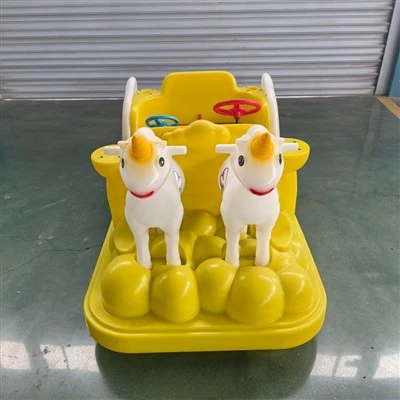
If you’re ready to talk about adjusting power for your fleet, or just have more questions about electric bumper cars, feel free to connect with me. I’m always happy to help a fellow ride operator get the most out of their equipment, without the headache of safety issues.
Electric Bumper Cars References:
- ASTM F2476-19, Standard Consumer Safety Specification for Amusement Bumper Cars
- International Organization for Standardization (ISO) 18106:2019, Amusement rides – Bumper cars – Safety requirements
- National Amusement Ride Association (NARA) 2023 Annual Safety Report: Bumper Car Incident Root Cause Analysis
Shandong Feiteng Intelligent Technology Co., Ltd.
As one of the most professional electric bumper cars manufacturers and suppliers in China, we’re featured by quality products and good price. Please rest assured to buy discount electric bumper cars in stock here from our factory. If you have any enquiry about cooperation, please feel free to email us.
Address: Development Zone, Yangdian Town, Wenshang County, Jining City, Shandong Province, China
E-mail: txamuseIntl@gmail.com
WebSite: https://www.tongxingplay.com/
