What the Hell Is Tilt Casting, Anyway?
Let’s be real—if you’re deep in the metal castings game, you’ve probably heard “tilt casting” tossed around by engineers or shop foremen, but if you’re new to sourcing high-quality cast parts, it might sound like some weird, niche pour trick. I’m Jake, operations lead at a small metal castings supplier that’s been grinding out custom and standard parts for 18 years, and let’s cut through the jargon: tilt casting isn’t rocket science—but it’s the reason we can deliver parts way cleaner and stronger than your average sand casting, no fancy overengineering required. Metal Castings
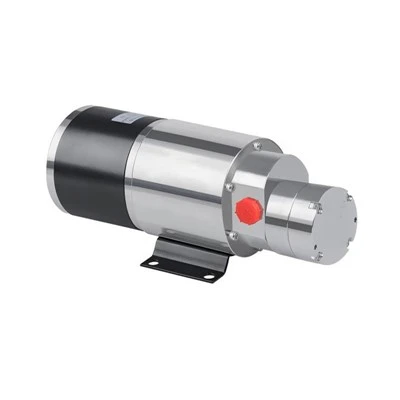
First, let’s break down the basics the way I explain it to a new intern who’s still mixing sand for test runs. Tilt casting is a precision metal forming process where you pour molten metal (aluminum, brass, bronze, even some steels for specific jobs) into a mold that’s mounted on a tilting machine arm. Here’s the part that makes it different from every other casting you know: you don’t just dump the hot metal straight down into a cold, stationary mold. You tilt the mold gradually—usually 30 to 90 degrees, depending on the part shape—while you pour, so the metal flows in one smooth, controlled curve instead of crashing into the bottom of the mold.
Wait, let’s make that specific. If you used sand casting, you’d have a mold split into two halves, you’d melt aluminum to like 1,200°F, ladle it, and dump it into the sprue (that little funnel hole) on top. The metal hits the bottom of the mold cavity hard, sends up steam from the moisture in the sand, traps air bubbles, and can even wash out sand grains into the part. Tilt casting fixes that by eliminating those two headaches right out the gate. We’ve seen it cut reject rates for tight-tolerance parts by 40% compared to old-school sand casting, and that’s not a flex—that’s numbers we track every shift.
How does the tilt part actually work, though? We don’t just have a guy tipping a bucket with a mold on it (trust me, we tried that in 2012 and ended up with a bad case of third-degree burns, so don’t). Our tilting machines are computer-controlled, even for the smaller, lower-volume jobs. You load a pre-made mold—could be a steel die mold, a ceramic shell mold, or even a permanent metal mold—onto the machine’s table, which locks it in place. You set the tilt angle and speed based on the part design: if it’s a long, thin hydraulic valve body, we tilt it slow, like 10 degrees per second, so the metal flows along the entire length without leaving gaps. If it’s a bulky engine mount with thick sections, we tilt a bit faster but still steady enough to avoid turbulence.
Once the pour’s done, we hold the mold tilted for 10 to 20 extra seconds, depending on the metal, so the last of the air escapes before the metal solidifies. No more cold shuts (those weird, cracked seams where two metal streams didn’t mix right) or porosity (tiny air holes that make parts weak)—those are the top two complaints we get from customers who tried other casting processes, and tilt casting solves almost all of ’em.
Now, let’s talk about when tilt casting is worth it, because it’s not for every part. I see too many folks call us saying “we need 10,000 brackets, use tilt,” and I have to hit pause. Tilt casts shine in two main buckets: parts that need high strength and tight tolerance, and parts with complex, internal geometries. For example, if you’re making a marine propeller blade—something that’s underwater, takes constant stress, and can’t have even a tiny air hole that’d crack mid-voyage—tilt casting is non-negotiable. We did a job last year for a boat manufacturer; their old sand cast props had a 12% failure rate within two years. Our tilt-cast versions? They’ve had zero failures in 18 months of field tests. That’s the kind of reliability that makes customers come back.
Another use case: parts with thin walls, like medical device housings or aerospace brackets. If a wall’s less than 3mm thick, you need metal that flows evenly without stopping mid-pour. Tilt casting’s smooth flow means metal reaches every corner of the mold, no cold spots. We do a lot of small titanium brackets for drone components—those are the kind of parts where a 0.5mm gap in the wall is a dealbreaker, and tilt casting nails it every time.
But wait, what are the downsides? No process is perfect, right? Tilt casting has higher tooling costs upfront than sand casting, especially if you need a custom mold. If you’re only making 50 parts, sand casting’s cheaper; tilt isn’t worth the machine setup time. Also, it’s not great for super large parts—like, anything over 500lbs is hard to handle on the tilting machines we use, so we refer those out to our trusted large-format casting partners. And you’re limited to metals that can handle the controlled pour—we don’t do ferrous steels (the heavy, rust-prone kind) for most jobs, though we can work with specialty stainless steels if the part specs call for it.
Let me also clear up a common misconception I hear all the time: “Tilt casting is just investment casting with a tilt, right?” Nah. Investment casting uses a ceramic shell mold, you dip it in wax, melt the wax out, pour metal. Tilt casting works with investment molds, sure, but it also works with permanent steel molds (like the ones we use for aluminum automotive parts) and even graphite molds for small, high-precision jobs. It’s the tilting action that’s the core, not the mold material. That’s why we can use it for everything from low-volume prototype runs (like 20 parts for a new product test) to mid-volume production (up to 5,000 parts a month) without switching processes entirely.
I should also mention the quality side, since that’s why our customers stay. Tilt casting produces parts with way better surface finish, too. No more sand inclusions, no rough, pitted surfaces that require hours of CNC machining to smooth out. We often can skip the secondary grinding step for tilt-cast parts, which cuts lead times by a week or two for our customers. That’s a big deal when you’re rushing a part for a product launch or a maintenance repair.
Let’s get specific with a real example: Last quarter, a customer came to us with a problem. They needed 1,200 brass connectors for a power tool, and their previous supplier’s sand cast parts were failing because of porosity—so when they pressed the connector into the tool housing, it cracked. We ran a test batch with tilt casting: same mold, same brass alloy, just the tilting action added. The reject rate dropped from 11% to less than 1%, and the customer saved $12,000 in rework and replacement parts in the first three months. That’s the kind of impact tilt casting has on real businesses, not just engineering whitepapers.
Now, if you’re reading this, you’re probably either a procurement manager tired of dealing with bad cast parts, an engineer looking for a better process for a new design, or someone just nosy about metal casting. If that’s you, and you think tilt casting might fit your project, let’s cut the small talk. We’re not the biggest casting supplier out there, but we specialize in custom, high-quality parts for customers who don’t want to compromise on reliability. We can run small prototype batches, mid-volume production, or even fix a bad run from another supplier with tilt casting. Shoot us a message to chat through your part specs, or send over a CAD file, and we’ll give you a no-nonsense quote without the fine print.
At the end of the day, tilt casting isn’t some fancy trend—it’s a solid, proven process that solves the most common headaches in metal casting. No tricks, no overcomplicated tech, just a smart way to pour metal that gives you parts that work when you need them to. If that’s what you’re after, let’s connect.
CNC Machining References
- Campbell, J. (2015). Casting Processes for Engineering Applications. Butterworth-Heinemann.
- Tilt Casting Technology Association. (2022). Industry Standards for Precision Metal Forming.
- American Foundry Society. (2021). Handbook of Metal Casting Processes.
Sanming Hongfeng Machinery Manufacturing Co., Ltd.
As one of the most professional metal castings manufacturers and suppliers in China, we’re featured by quality products and good service. Please rest assured to wholesale customized metal castings made in China here from our factory. Welcome to contact us for quotation.
Address: No.2 Gaoyuan Industrial Zone, Chenda Town, Sanyuan District, Sanming City, Fujian Province, China
E-mail: smhfjxzsq@163.com
WebSite: https://www.smhfmachinery.com/
