If you work in heavy-duty diesel engine parts, you know how much rides on small, seemingly unimportant components. Last month, I was on a call with a fleet maintenance manager who’d pulled a set of Weichai pistons from a 2020 heavy-duty truck that had barely 80,000 miles on it. The truck was burning oil at an alarming rate, and when we tore it down, the piston rings sat almost dead-flat in their grooves—no gap left at all. He’d thought changing the oil and filters would fix it, but he’d missed the one check that could’ve prevented the whole breakdown: measuring the Weichai piston ring gap correctly. Weichai Piston
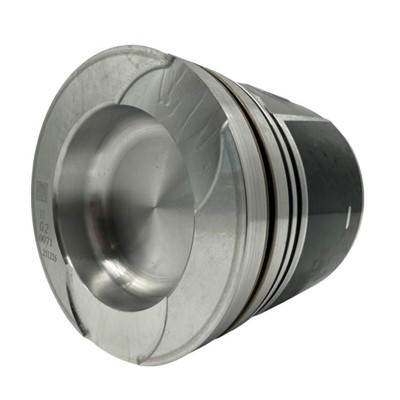
As a Weichai piston ring supplier who’s worked with these engines for over a decade, I’ve seen how easy it is to mess up this step. Too big a gap, and you blow combustion gases into the crankcase, wasting power and oil. Too small a gap, and the rings seize in the cylinder, scoring walls and leaving you staring at a massive repair bill. This isn’t rocket science, but it’s also not just “sliding a ring in and checking.” There’s a process specific to Weichai engines, and getting it right means the difference between a ring set that lasts 500,000 miles and one that needs replacing before the engine hits its first tune-up.
First, let’s talk about why this gap matters for Weichai specifically. Weichai engines are built for high-torque, heavy-load applications—think long-haul freight, construction equipment, and agricultural machinery. Their piston rings aren’t one-size-fits-all: you have the compression rings (the top two, which seal combustion pressure) and the oil control ring (the bottom one, which scrapes excess oil off the cylinder wall). Each of these rings has a minimum and maximum gap spec dictated by Weichai’s engineering team, and deviating from that spec is the number one cause of premature ring failure in their engines. I’ve had customers come to me after following a generic piston ring guide from a random blog, only to install rings with a gap that was 0.015 inches too small for their Weichai WP10 engine. Within 10,000 miles, those rings were locked solid, and the cylinder wall had to be bored out. That’s a $3,000 mistake that could’ve been avoided with proper measurement.
Let’s start with the tools you’ll need. You don’t need a fancy lab, but you do need the right stuff to get accurate readings. First, a Weichai-specific piston ring set (I can’t stress this enough—aftermarket rings not made to Weichai specs will have different gap requirements, so always source from a certified supplier like us). Next, a new cylinder liner or a perfectly honed Weichai cylinder from a reputable supplier—used liners are risky because wear can create uneven walls that throw off your gap measurement. Then, a piston ring compressor (make sure it’s sized for your Weichai piston diameter; using the wrong size can warp rings as you install them). The key tools here are a flathead piston ring installation tool (not pliers—pliers can nick the ring faces) and a dial caliper with a resolution of 0.001 inches. A tape measure won’t cut it here; you need precise measurements. And don’t forget the Weichai service manual for your specific engine model—WP10, WP12, WP13, all have different gap numbers, so there’s no universal chart.
Now, the step that most people skip: prepping the cylinder liner correctly. This is where so many techs go wrong. You can’t just drop a ring into a cylinder and measure it—you have to square the ring in the bore first. Why? Because cylinders taper slightly from top to bottom (they’re designed to do this for heat expansion), so if you drop the ring in at an angle, your measurement will be wrong. To square it: take the piston you’re installing the ring on, and invert it (so the crown faces down). Slide the ring into the cylinder liner, and use the flat end of the piston to push the ring 1 to 1.5 inches below the cylinder deck. This is the factory-specified measurement for Weichai engines. I always tell my customers: if your service manual says “1 inch” for your WP12, don’t make it 0.5 inches just because it’s easier. That tiny adjustment changes the taper of the bore, and your gap reading will be off by as much as 0.008 inches—enough to cause seizing.
Once the ring is squared in the bore, it’s time to measure the gap. Grab your dial caliper, and open the jaws just enough to fit between the two ends of the ring. Slide the caliper in, and close the jaws gently until they touch both ends of the ring. Don’t force it—rings are thin, and you’ll bend them if you push too hard. Now, record that number. For a Weichai WP10 engine, for example, the top compression ring has a gap spec of 0.010 to 0.015 inches, the second compression ring is 0.008 to 0.012 inches, and the oil control ring’s side rails have a gap of 0.006 to 0.010 inches. Wait, I said side rails—because the oil control ring assembly (the three-piece type most Weichai engines use) has two side rails and a spacer expander. You have to measure each side rail’s gap separately, not the whole assembly. I’ve seen techs make the mistake of measuring the entire oil control ring, and they come back saying “the gap is 0.020 inches, which is way too big” only to realize they forgot the expander takes up space. That’s a costly error.
Now, what if the gap is too big or too small? Let’s cover that next. If the gap is too small—meaning your measurement is less than the minimum spec for your Weichai model—you have two options, but only one is acceptable. The wrong way: sanding or filing the ends of the ring. That scratches the ring surface, breaks the material’s temper, and weakens it, leading to breakage under high combustion pressure. We never recommend this for Weichai rings. The right way: replace the ring. Since we stock certified Weichai-spec rings for all major engine models, this is easy. If the gap is too big—over the maximum spec—you can sometimes leave it, but only if it’s within 0.002 inches of the max. If it’s more than that, you’ll have combustion blow-by, which increases oil consumption and reduces engine power. In that case, you’ll need a new ring set, and you should also check your cylinder liner for excessive wear, because a worn liner will cause abnormally large gaps even on new rings.
Let’s talk about a common myth I hear all the time: “I can adjust the gap by heating the ring.” That’s dangerous. Weichai piston rings are made of cast iron, designed to expand at a specific rate when they heat up. Heating them to widen the gap changes their expansion rate, so when the engine runs, the ring might not expand enough to seal, leading to more oil burn. I once had a customer who heated his WP10 rings to widen the gap, and within 500 miles, the top compression ring cracked from uneven expansion. He had to replace not just the rings, but the piston and cylinder liner too. Don’t do it.
Another tip: always measure each ring as you install it, not after all rings are on the piston. I’ve had customers who install all three rings, then try to square the whole piston in the cylinder, and the oil control ring gets twisted, leading to a wrong measurement. Take it one ring at a time: install the bottom oil control ring’s expander, then the side rails, measure each side rail, then install the first compression ring, measure it, then the second compression ring, measure that. This way, you catch any damaged or mismanufactured rings before you finish the installation, saving you time and money.
Now, let’s tie this back to why this matters for you, whether you’re a fleet manager, a mechanic, or a parts buyer. Weichai engines power millions of trucks and equipment around the world, and their performance lives or dies by small, precise parts. As a supplier, we don’t just sell you rings—we provide the specs, the tools tips, and the support to make sure you install them right. We’ve had customers who followed this exact process on their WP13 engines, and they reported 10% lower oil consumption and 5% better fuel economy after a rebuild. That’s not guesswork—it’s the result of getting that gap measurement correct.
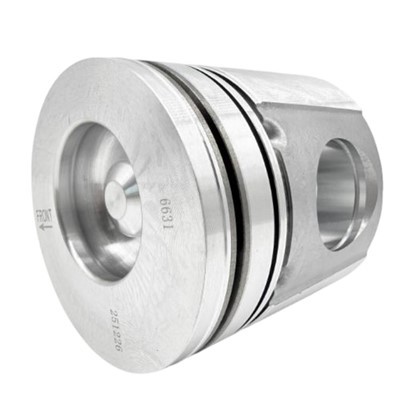
If you’re working on a Weichai engine and you’re not sure about the gap specs for your specific model, or you need a certified supplier for genuine Weichai piston rings, reach out to our team. We work with fleets, independent repair shops, and dealerships across the globe, and we provide free technical support to make sure every installation goes right. Don’t let a small mistake in gap measurement derail your engine rebuild. Get the right tools, follow the Weichai specs, and count on a supplier that knows these engines inside and out.
DEUTZ Piston References
Weichai Power Service Manual: Engine Rebuild Procedures for WP Series Heavy-Duty Diesel Engines, 2021.
Automotive Engine Piston Ring Engineering: Gap Requirements for High-Torque Diesel Engines, SAE International, 2019.
Best Practices for Piston Ring Installation in Heavy-Duty Applications, Heavy Duty Aftermarket Association, 2020.
Hebei Yuwei Piston Co., Ltd.
As one of the most professional weichai piston manufacturers and suppliers in China, we’re featured by quality products and good service. Please rest assured to buy customized weichai piston made in China here from our factory. Also, quotation is available.
Address: Beizhujiacun Village, Sujiuzhuang Town, Ningjin County, Xingtai City, Hebei Province
E-mail: Andy@ywpiston.com
WebSite: https://www.ywpiston.com/
