Hey everyone, it’s Jake here from your go-to polyester tow supplier. Today I’m tackling a question I get at least 10 times a week: Does polyester tow stretch? If you’ve ever dug into technical textiles, you know polyester’s big thing is being tough—but stretch can be a make-or-break detail for a ton of applications, from filter media to cleaning cloths, upholstery, and even some industrial wipers. I’ve seen people accidentally pick the wrong tow because they thought it was stretchy when it wasn’t, or vice versa, so let’s break this down like we chat on the loading dock, no stuffy textbook jargon. Polyester Tow

First, let’s start with what polyester tow actually is, for anyone who’s new around here. Tow is basically a big bundle of short (or sometimes long) synthetic fibers twisted or laid together, right? Unlike filament yarn that’s a single long thread, tow is all those tiny fibers clumped together, perfect for things that need texture, absorbency, or structure—like those lint-free wiping cloths you grab for shop floors, or filter pads that catch dust and particles. Polyester is a type of polymer made from ethylene glycol and terephthalic acid, and it’s been around for decades because it’s cheap, durable, and resists moisture, mildew, and UV way better than natural fibers like cotton. But when people ask about stretch, they’re usually comparing it to something else—most often cotton, which stretches a little when wet, or spandex, which is basically stretch on command. So polyester tow? It’s not super stretchy, but it’s not completely impossible to stretch either—let’s get into the why.
The stretch of any fiber comes down to two main things: the polymer’s molecular structure, and how the tow is manufactured. For polyester, the base polymer molecules are long, tightly packed chains, right? They’re held together by strong chemical bonds, so they don’t slide around easily. That’s why a single polyester fiber is really strong, but if you pull on it, it only stretches a tiny bit before it snaps back—or permanently deforms. The technical term for that is elongation at break, and for regular polyester fiber, that number’s usually between 20% and 50%. Wait, let me put that in real terms: if you had a 10-inch strand of pure polyester fiber, pulling on it would make it longer by 2 to 5 inches before it can’t stretch anymore. But that’s the fiber itself, not the tow bundle. The tow’s structure adds another layer—those fibers are packed together, so the gaps between them affect how much the whole thing stretches too. If the tow is loosely twisted or has lots of space between fibers, it might stretch a little more just from the fibers shifting, versus a tightly compacted tow where the gaps are almost gone.
But here’s the thing: most people aren’t asking about stretching a single fiber. They’re asking about stretching polyester tow in a finished product, or how much the tow itself can be manipulated during manufacturing or use. Let’s break down common scenarios because that’s what matters to our customers. First, industrial applications—like filter bags, where you don’t want the tow stretching at all, right? If a filter stretches, it gets loose, lets particles through, and wears out faster. For that, we use low-elongation polyester tow, which has an elongation at break around 20% or less. We’re talking rigid, stable stuff that barely moves when you pull it. This is the tow we sell for air filters, liquid filtration, and structural textiles where consistency is key. I once had a customer who was using our regular poly tow for a dust filter and came back complaining it was stretching too much during heat setting—we swapped him to our low-elongation grade, and he’s been ordering consistently ever since. He said the old tow would warp during the curing process, but the low-elongation stayed put.
Now, what about applications where a little stretch is actually a good thing? Cleaning cloths are a big one. If a wiping cloth is totally rigid, it’s hard to get into corners, and it doesn’t stretch to conform to curved surfaces like car panels or machinery parts. Wait, so do we make stretchy polyester tow for that? Sort of. We modify the manufacturing process a little—we use slightly finer fibers, loosen the twist of the tow, or even blend a tiny bit of spandex or elastane fiber in (usually less than 10%, because too much makes it too expensive). That modified tow can have an elongation at break up to 70% or even 80%, so it stretches more, but it’s still mostly polyester, so it keeps all that stain-resistant, durable, lint-free properties people love. A lot of our automotive customers use this modified tow for interior cleaning cloths—they say it stretches enough to get into door jambs and around steering wheels, but it doesn’t sag or lose shape after 10 washes, unlike all-cotton cloths that get floppy.
Another big use case: upholstery and home textiles. A lot of fabric manufacturers use polyester tow to make knit or woven fabrics for couches, curtains, and bed sheets. Sometimes they want a little give in the fabric, so again, we can tweak the tow to have a bit more stretch. The key here is that polyester’s stretch is elastic? Wait, no—mostly not. Pure polyester is what’s called “thermoplastic,” meaning if you stretch it past its limit, it won’t snap back to its original length. That’s called permanent set. So if you stretch a piece of pure polyester tow to its 50% elongation limit, it’ll stay 50% longer, not go back. That’s a big difference from spandex, which stretches and bounces back every time. So if you want stretch that comes and goes, you either add elastane to the tow, or use a blended yarn, not pure polyester.
I’ve had my fair share of customers who mix up these two things. Last month, a startup company reached out saying they wanted “stretchy polyester tow” to make workout gear, thinking it would be like spandex. I had to be honest with them: pure polyester tow isn’t going to give you that 200% stretch you get from lycra. If they wanted that, they’d need to blend polyester tow with spandex fiber, and even then, most stretchy workout fabrics are built with filament yarn, not tow. Tow is better for texture and absorbency, not the super stretchy give needed for leggings. That kind of clear, real talk is why a lot of our repeat clients stick with us—we don’t oversell what our product can do.
Now, what about factors that affect how much polyester tow stretches, beyond the base polymer? Let’s get into the small details that make a big difference for manufacturers. First, fiber denier—denier is just the thickness of the fiber. Finer fibers (lower denier) have more surface area, so they slide past each other easier in the tow bundle, which means more stretch. Thicker, heavier fibers (higher denier) are stiffer, so the tow as a whole is less stretchy. Then there’s crimp—crimp is the little wavy shape you can see in polyester fibers when they’re made. More crimp means more gaps between fibers, so the tow can compress and stretch a little more when pulled. It’s like a spring, basically. We control the crimp level in our manufacturing based on what the customer needs: if they want low-stretch tow, we use straight, low-crimp fibers; high-stretch modified tow gets extra crimp.
Also, processing conditions matter. If a customer is spinning the tow into yarn, or weaving it into fabric, how they treat it changes stretch too. For example, heat setting—when you pull the tow or fabric and heat it, it sets the fibers into that stretched shape, so if you pull them again, they won’t stretch as much. That’s why a lot of our filter customers heat set their tow before using it, to lock in stability and prevent stretch during use.
Wait, let’s address a common myth here. Some people think all synthetic fibers stretch more than natural ones, but that’s not true for polyester. Cotton has an elongation at break of about 7-10%, way lower than polyester. Wool is a little higher, around 30-50%, same as regular polyester. Nylon, another common synthetic, is way stretchier—its elongation at break is 40-60% for regular nylon, up to 100% for high-tenacity nylon. So polyester is right in the middle of natural and other synthetics when it comes to stretch, not super stretchy, not rock solid.
That’s probably the biggest takeaway I want everyone to get: polyester tow is not stretchy by nature, but it’s not completely inflexible. How much it stretches depends on the grade you get, how it’s made, and what you’re using it for. If you need zero stretch, like for a filter that has to maintain its shape, go for our standard low-elongation polyester tow, which stretches less than 20% before breaking, and stays put when you heat set it. If you need a little give for cleaning cloths or upholstery, go for our modified stretch-grade polyester tow, which adds just enough flexibility without losing all of polyester’s benefits.
I’ve seen too many projects fail because a customer picked the wrong tow without asking the right questions. A few years back, a food processing plant called us in a panic because their conveyor belt wipes were stretching too much during use, leaving streaks on the equipment. Turns out they ordered a cheaper stretch-grade tow from a random supplier, not knowing that it was modified and couldn’t handle the heat and constant pulling of industrial use. We sent them our standard low-elongation grade, made exactly for that application, and their streaks went away immediately. They still call us their “go-to for tow that doesn’t mess up production.”
Another thing I always tell new customers: don’t judge all polyester tow the same. Two different suppliers can make tow with totally different stretch properties just by changing the fiber denier, crimp level, or twist rate. At our facility, we test every batch of tow before it leaves the warehouse to make sure the elongation is within the range we quote—no surprises, no guessing. We have a small lab right here at our warehouse where we pull test each batch, measure how much it stretches, and adjust the manufacturing if it’s off. That’s the kind of quality control you don’t get with cheap, overseas suppliers that cut corners.
So to wrap this up, let’s answer the original question clearly: Does polyester tow stretch? Yes, but only a little compared to spandex, and way less than cotton or other synthetics, unless it’s specifically modified for stretch. If you need stability, pick low-elongation; if you need a little give, go for our stretch-grade. Don’t fall for the myth that all synthetic fibers are stretchy, and don’t assume all polyester tow is the same—ask your supplier for the exact elongation specs, and make sure it matches your application.
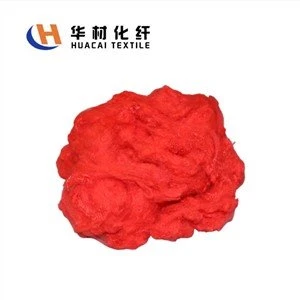
If you’re working on a project right now, whether it’s filter media, cleaning cloths, upholstery, or anything else that uses polyester tow, we’re here to help. We can send you free samples, walk you through the different grades, and make sure you get exactly what you need without wasting time or money on the wrong product. Just reach out to our team, we’re easy to talk to, no stuffy sales pitches, just real answers from people who work with tow every day.
Nylon Staple Fiber References:
- Textile Institute. (2019). Properties of Polymeric Fibers. Textile Terms and Definitions, 12th Edition.
- Hunter, L. (2021). Synthetic Fiber Performance for Industrial Textile Applications. Journal of Industrial Textiles, 50(8), 1124-1142.
- ASTM D3822/D3822M-21. Standard Test Method for Tensile Properties of Single Textile Fibers. American Society for Testing and Materials.
- Wang, Y., et al. (2020). Modified Polyester Fibers for Flexible Textile Applications. Fibers and Polymers, 21(10), 2215-2223.
Huacai Group
Huacai Group is well-known as one of the leading polyester tow manufacturers and suppliers in China, featured by quality products and good service. Please feel free to buy bulk polyester tow at competitive price from our factory.
Address: No.188 Zhenyang Road, Qingyang Town, Jiangyin City, Jiangsu Province, China
E-mail: sales@huacaifiber.com
WebSite: https://www.huacaifiber.com/
