If you’ve ever stood in the middle of a home renovation, paint roller in one hand, color swatch in the other, staring at a row of interior doors, you’ve probably asked yourself the same question I’ve heard dozens of times: Should I paint interior doors all the same color? As the owner of a paint door supplier that’s worked with homeowners, contractors, and architects for over a decade, I’ve seen every take on this choice—from the “match every trim” purists to the “bold color for each door” rebels. The answer isn’t a one-size-fits-all, but it’s rooted in practicality, flow, and what actually makes your space feel like home. Let’s break it down. Paint Door

First, let’s talk about the biggest benefit of painting all interior doors the same color: it streamlines your home’s visual flow. Think of your home as a series of connected rooms, each with its own purpose but part of a single story. When doors are the same color, they act as subtle bookends that tie these spaces together, rather than visual distractions that pull the eye to a door that’s a different shade or tone. For example, a client of mine last year was renovating a 1,800-square-foot 1950s ranch, and she originally planned to paint each of her five interior doors a different color to match each room’s vibe—soft blue for the bedroom, warm green for the nursery, crisp white for the home office. But halfway through, she called me frustrated: the doors made her small home feel choppy, like each space was a separate apartment instead of part of a whole. We recommended painting all doors a soft off-white, and within a week, she sent a photo showing how the space felt twice as open, with each room’s unique personality still shining through without the doors breaking the line of sight.
Practicality is another huge factor, especially for anyone working with tight timelines or budgets. If you’re painting doors yourself, buying one can of paint that works for all five doors means less time at the hardware store, fewer trips back for touch-ups, and no risk of mismatched batches that leave one door slightly lighter than the next. For contractors, this is a non-negotiable win: consistent door paint means they can prime and paint all doors at once, cutting project time by days and reducing labor costs for clients. I’ve had contractors tell me that when a homeowner insists on custom door colors for each space, it adds an extra 10-15% to their paint budget just because of the extra material and time needed to prep, mix, and apply different shades. That’s a cost you might not have considered when picking that perfect terracotta for your guest room door.
But wait—this doesn’t mean painting all doors the same color is the only choice, or that it works for every home. Let’s talk about when it might not be the right move, because there are scenarios where varying door colors makes sense. For example, if you have a home with very high ceilings and large open-concept spaces, doors can be a way to add subtle definition without overwhelming the room. A client in a modern loft had 10-foot ceilings and walls in a neutral gray; painting her powder room door a deep navy and her master bedroom door a soft sage added small pops of color that defined those functional spaces without cluttering the open layout. Another case: homes with small, separate rooms where each space has a very specific purpose, like a home office with a black door to signal “work mode” or a playroom door with a bright yellow to match kids’ artwork. In these cases, varying door colors can reinforce the room’s function, which is a big plus for families or anyone who uses their space for specific tasks.
There’s also the question of door style and material, which I’ve learned is critical to the right choice. If you have paneled doors (the most common style in older homes) or solid wood doors, painting them the same color as your trim gives them a seamless, built-in look that feels intentional, not sloppy. But if you have flat-panel doors (popular in modern construction) or metal doors, a subtle variation can add depth without feeling disjointed. For example, flat-panel doors painted one shade darker than your walls create a gentle frame for each room, drawing attention to the door without making it stand out awkwardly. As a paint door supplier, we work with both primed and prefinished doors, and we always advise clients to test a small swatch on a door and hold it up to two or three different walls before committing—lighting changes everything, and what looks like a perfect white in the hardware store can feel too warm or too cool once it’s on your door next to a wall with yellow undertones.
I should also address the old rule that doors should match trim, or be the same color as walls. That’s a myth that’s been around for decades, and it’s one I push back on all the time. The truth is, there’s no hard and fast rule—only what works for your space. When a contractor brings a door to our warehouse, the first question I ask isn’t “what color is your trim?” it’s “what do you want this door to do?” Do you want it to blend in so you don’t notice it? Match the baseboards and base the whole house feels cohesive? Or do you want it to pop so guests see it and know where the guest room is? Both choices are valid, but the key is being consistent with your choice—if you’re painting all doors the same, stick to that across every door, even the ones in closets or utility rooms. If you’re varying them, don’t make the mistake of painting one door a shade and another a completely unrelated color that clashes with adjacent walls.
Another point I hear a lot: “But painting all doors the same color will make them look boring!” Let’s test that. A friend of mine has a 2,000-square-foot colonial home, and she painted all her interior doors a crisp, warm white that’s the same as her ceiling color. The doors still have panel detailing, and when she added hardware—brass doorknobs, black hinges, decorative kick plates—the doors felt intentional, not boring. The same goes for texture: even if all doors are the same color, slight differences in wood grain, panel depth, or hardware can add character. On the flip side, doors that are all different colors can end up looking like a patchwork if not executed well, especially in smaller homes where there’s no room for each color to shine.
Let’s wrap this up with a few quick questions to ask yourself before making a decision. First: What’s the size of your home? Smaller homes (under 1,500 square feet) almost always benefit from same-color doors, because they reduce visual clutter and make space feel larger. Larger homes with open layouts can handle subtle variations, but even then, same-color doors are a safe, timeless choice. Second: Are you planning to sell your home in the next 5 years? If so, neutral same-color doors are a huge plus for resale. Buyers want spaces that feel open and easy to customize, and mismatched doors can make a home feel dated or poorly planned. Third: What’s your personal style? If you love a cohesive, minimalist look, same-color doors will feel like a win. If you’re drawn to eclectic, bold design, a few carefully chosen different door colors can work—just keep them in the same color family to avoid chaos.
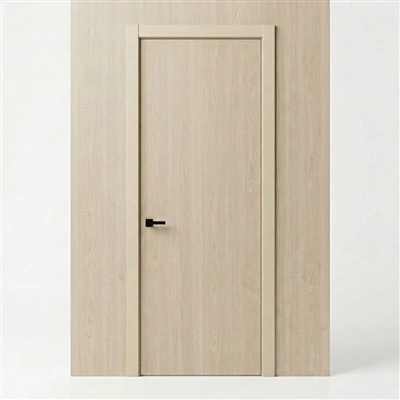
As a paint door supplier, I’ve seen how this choice can make or break a space, and the best part is that it’s flexible. If you’re still unsure, you can order a sample primed door from us, test paint it in your chosen color, and live with it for a week before making a final decision. That small step can save you from the stress of repainting doors later, which is a task no one wants to add to their to-do list. If you’re working on a renovation, have questions about door materials, paint types, or how to execute your chosen look, feel free to reach out to our team to discuss your specific needs. We’re here to help you choose options that work for your space, your budget, and your style, whether that means same-color doors, subtle variations, or something in between.
Carved & Inlaid Door At the end of the day, there’s no right or wrong answer. The goal of painting interior doors is to enhance your home, not to follow rules for rules’ sake. Whether you go all one color, mix and match, or lean into a middle ground, the best choice is the one that makes your space feel like yours.
References
- National Association of Home Builders. (2022). Interior Design Trends for Modern Homes. Retrieved from industry publications on residential design standards.
- Paint Quality Institute. (2021). Color Coordination Tips for Interior Doors and Trim. Retrieved from industry resources on paint application and visual design.
- Residential Renovation Contractors Association. (2023). Cost Saving Strategies for Interior Painting Projects. Retrieved from industry guidelines for renovation project planning.
One May Dee Show Furniture Co., Ltd.
As one of the most professional paint door manufacturers and suppliers in China, we’re featured by quality products and good price. Please rest assured to wholesale cheap paint door made in China here and get quotation from our factory. Customized orders are welcome.
Address: Laomiao Village, Dacheng Town, Sanyuan County, Xianyang City, Shaanxi Province, China.
E-mail: trade@omdoor.com
WebSite: https://www.omdoor.com/
