If you’ve ever stood beneath an overhead line tower (the tall steel structures you see strung with power lines across highways, fields, and mountain ranges), you’ve probably wondered: how do these enormous steel frames hold up against gale-force winds, ice buildup, and decades of harsh weather? As a supplier of overhead line towers, I get this question all the time—from new power grid developers just breaking ground, to seasoned utility operators upgrading aging infrastructure. The maximum load a tower can bear isn’t a random number pulled from a design manual; it’s a precise calculation that balances engineering physics, local conditions, and years of field testing, and getting it wrong can have costly, even dangerous, consequences. Let me break this down in plain terms, no jargon overload, just the real-world engineering that goes into every tower we ship. Overhead Line Tower

First, let’s define what “maximum load” actually means here. When people ask, they’re usually thinking about two big categories of forces that act on a tower: dead loads and live loads. Dead loads are the permanent weight that never goes away—think the tower’s own steel structure, the insulators that hold the power lines, and the weight of the lines themselves. Live loads are the variable forces that change with weather: wind pushing sideways on the tower and the lines, ice or snow weighing down the lines, and even the tension from the lines stretching or pulling in different directions. We size every tower to handle a combination of these, tailored exactly to where it’s going to be installed.
Let’s start with dead loads because they’re the baseline. A standard 110 kV overhead line tower, for example, weighs between 10,000 and 15,000 pounds, right off the bat. Add in the string of insulators (usually made of ceramic or composite, each insulator is a few pounds) and the power lines themselves—aluminum conductor steel-reinforced (ACSR) lines, the most common type, weigh about 0.5 to 1 pound per foot. For a mile-long span between two towers, that’s 2,640 to 5,280 pounds of line weight alone, split evenly between two towers. Dead loads are relatively straightforward to calculate because they’re fixed: we use exact steel thicknesses, line sizes, and insulator counts to get a static number, no guesswork here. The tricky part is the live loads, which vary wildly based on location.
Wind is the biggest variable by far, and it’s the reason we can’t use a one-size-fits-all tower. A tower installed in the Great Plains, where tornadoes and 100+ mph winds are common, needs to be built much sturdier than one in the Pacific Northwest, where wind speeds rarely top 60 mph. We use wind speed data from local meteorological agencies, often factoring in a 50-year or 100-year return period—meaning that wind speed is the strongest that would be expected once every 50 or 100 years in that area. For example, in a region with a 100-year wind speed of 110 mph, we calculate the pressure the wind exerts on the tower and the lines, and design the steel framework to resist that force. That means thicker steel legs, wider cross-bracing, and even aerodynamic shaping for parts of the tower to reduce wind drag. It’s not just about how fast the wind blows, but how much surface area the tower has for the wind to push against—so taller towers or towers with broader frames need extra reinforcement, even if they’re in a region with similar wind speeds to a shorter tower.
Then there’s ice and snow, which are huge in cold, snowy regions. When temperatures drop, supercooled moisture in the air freezes onto power lines and tower arms, adding layers of ice that can be an inch or more thick. A 1-inch thick layer of ice on a line that’s 1.5 inches in diameter adds about 2.5 pounds per foot of weight—tripling the line weight from the dead load alone. Multiply that by a mile of line, and that’s tens of thousands of pounds of extra weight pulling down on the towers. Add snow on top of that, and you’re looking at even more load. We use local ice load standards, again based on return periods, to design towers that can handle this buildup without bending or collapsing. Some areas, like the mountainous parts of the Rockies, have ice loads so high that towers there need to be 20 to 30% heavier than identical towers in warmer, drier regions.
Another often-overlooked factor is tension in the power lines themselves. When lines get hot in the summer, they expand and sag between towers; when it’s cold in the winter, they contract and pull tighter. This thermal expansion and contraction creates horizontal tension on the towers—so in the winter, when lines are tight, a tower might be pulling side-to-side with thousands of pounds of force, even without wind or ice. Engineers calculate this tension based on the type of line, the span between towers, and the local temperature range, and make sure the tower’s cross-bracing and anchor bolts can resist that pulling force. It’s not just vertical load (weight) we have to worry about; horizontal loads from wind and line tension are just as important.
So what’s the actual maximum load number we’re talking about? For a typical transmission line tower, the total combined load (dead + maximum live load) usually falls between 20,000 and 50,000 pounds—wait, that’s just the total, right? No, actually, that’s the load at the tower’s top, but the tower’s legs have to bear much more, because the load is distributed down the frame. A tower’s steel legs are engineered to handle up to 100,000 pounds of compressive force per leg, in some cases, and even more for extra-tall towers in extreme conditions. For example, a 500 kV tower built in a hurricane zone might have a total design load of over 150,000 pounds across all four legs, with each leg supporting up to 40,000 pounds of compression. That’s equivalent to stacking 20 fully-grown elephants on top of each leg—no small feat, and it’s why each tower is custom-designed for its site.
But here’s the thing: that maximum load isn’t a hard “break point” where the tower will collapse instantly. Engineers use a safety factor, usually 1.5 to 2.5, to make sure the tower can handle loads above the design limit without failing. That means if a tower is designed to bear 50,000 pounds of maximum load, its actual failure load is between 75,000 and 125,000 pounds, depending on the steel grade and design. Safety factors are non-negotiable in this industry; we’ve seen what happens when they’re skipped—collapsed towers, power outages that last for days, and even safety risks to line workers. That’s why we never cut corners on steel thickness or material quality, and why all our towers are tested in controlled load trials before they ship. We’ll set up a tower in our test yard, add weights incrementally, and measure for deflection (how much it bends) to make sure it stays within safe limits. A small amount of deflection is normal—we design for a few inches of bend in high wind, but if it starts to bend more than that, we know there’s an issue and adjust the design.
I’ve been in this line of work for 12 years, and I’ve seen my share of projects that went wrong because of bad load calculations. Early in my career, I worked on a project in the Northeast where a contractor used a standard mid-Atlantic tower design for a site in Maine, without adjusting for Maine’s heavy ice loads. When the first big winter storm hit, several towers collapsed under the weight of ice, causing a 3-day power outage for 10,000 people. We fixed it by retrofitting those towers with extra bracing, but that mistake cost the utility company hundreds of thousands of dollars in downtime and repairs. That’s why our team at the supplier works closely with every client to get local weather data, site terrain details, and line specifications before we even draft a design. We don’t just send a generic tower and hope it works—we tailor every part to the specific conditions of the site.
Terrain is another factor people don’t always think about. A tower built on a flat, stable field will bear a different load than one built on a steep hill or loose soil. A tower on a hill is subject to extra horizontal force from being at an incline, and if the ground under it is soft (like sandy soil or peat), the tower’s foundation has to be stronger to distribute the load evenly. We design foundations to match the tower’s load and the site’s soil conditions, so the tower doesn’t sink or shift over time, which would put extra stress on the frame. Even the angle of the tower itself can change the load calculation—some towers are built with slight lean to account for wind or line tension, and that lean adjusts how much force the legs have to support.
Now, if you’re a utility company, power grid developer, or civil engineer working on a new line or upgrading an old one, how do you make sure you’re getting a tower that can handle the load for your site? First, work with a supplier that has in-house engineering—someone who knows the local codes and has experience with similar projects. Avoid suppliers that offer “one-size-fits-all” tower designs; every site is unique. Ask for load calculation reports, and make sure the safety factor is clearly stated. And don’t cut corners on material: high-grade structural steel, properly galvanized to resist rust, is non-negotiable for long-term load capacity. A tower that’s cheap upfront might fail in 10 years due to rust weakening the steel, which is a much bigger cost than investing in a properly designed tower from the start.
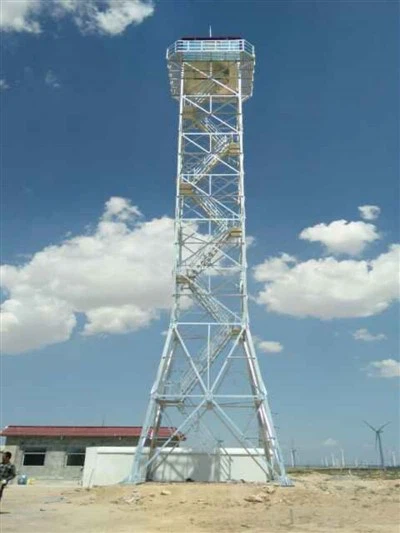
At the end of the day, the maximum load an overhead line tower can bear is a product of attention to detail, respect for local conditions, and rigorous engineering. It’s not about building the heaviest tower possible, but building the right tower—one that can stand strong against whatever nature throws at it, for decades. If you’re planning a new overhead line project, or need to replace aging towers, we can help you design a custom tower that meets your load requirements, fits your site, and is built to last. Reach out to our team to discuss your project details, and we’ll provide a tailored design and load calculation report that gives you the confidence your line will be safe and reliable for years to come.
Overhead Line Tower References
American Society of Civil Engineers. (2012). Load and Resistance Factor Design (LRFD) for Transmission Structures. ASCE 76-12.
International Electrotechnical Commission. (2018). Overhead Electrical Lines – Design Requirements. IEC 60826:2018.
U.S. Department of Energy. (2020). Transmission Tower Design and Installation Guidelines. DOE/NETL-2020/1967.
Hebei Yifeng Steel Structure Co., Ltd.
As one of the most professional overhead line tower manufacturers and suppliers in China, we offer a wide range of products with superior quality. Please feel free to buy cost-efficient overhead line tower for sale here from our factory. Contact us for more details.
Address: Guangchuan Town Industrial Zone, Jing County, Hengshui City, Hebei Province
E-mail: hbyfgjg@163.com
WebSite: https://www.yf-powertowers.com/
