If you’ve ever walked through a food processing plant, a pharmaceutical lab, or a mining operation, you’ve probably seen grinding equipment at work. At our company, we field this question constantly: “What’s the real difference between wet and dry grinding equipment?” It’s not just a matter of choosing which one to grab—it’s about matching the right technology to your material, production goals, and budget. Over the past 15 years as a grinding equipment supplier, I’ve seen first-hand how mischoosing between these two systems can derail a project, and how getting it right can boost output, reduce waste, and improve product quality. Let’s break down the science, the practical differences, and what that means for your operation. Grinding Equipment
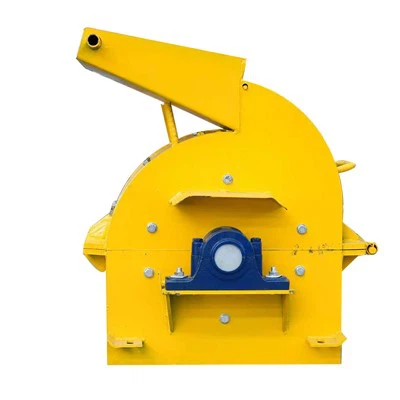
First, let’s start with the basics: dry grinding is exactly what it sounds like. You process a material in its solid, moisture-free (or low-moisture) state, using mechanical force to reduce particle size. This is the most common type of grinding for bulk materials—think cement clinker, grain, minerals like silica, or even plastic pellets. Wet grinding, on the other hand, mixes the material with a liquid, almost always water, during processing. The slurry (material plus water) is then circulated through the grinding chamber, where impact or friction breaks down particles. That core difference—whether liquid is present during grinding—ripples through every part of the equipment’s design, efficiency, and end use.
Let’s dive into how the equipment itself works, because that’s where the biggest practical gaps show up. Dry grinding equipment, for example, relies on airflows or internal screens to control particle size. A dry ball mill, one of the most common dry grinding machines, is a horizontal cylinder lined with steel or ceramic, filled with metal balls. As the cylinder spins, the balls lift and fall, crushing material between themselves and the mill walls. But without a liquid to carry particles, dry mills have to move air through the chamber to prevent overheating, because the friction of grinding generates a lot of heat. That means dry mills often have large exhaust fans, dust collection systems, and even cooling jackets to keep temperatures stable. If you’re grinding something heat-sensitive—like certain pharmaceuticals or food powders—those cooling systems add cost and complexity. You also have to account for dust: dry grinding creates fine particulate matter that can be a safety hazard, so equipment has to be sealed properly to comply with OSHA or other workplace safety regulations.
Wet grinding equipment works very differently. The liquid slurry acts as a lubricant and a carrier, so the grinding process is more consistent because particles are suspended, not clumped together. A wet ball mill, for example, uses the same rotating cylinder design, but instead of air, it pumps slurry through the chamber. The liquid also means you don’t have the same dust problem, which is a big plus for facilities with strict air quality rules. But wet grinding equipment has its own unique parts: slurry pumps, separators to remove excess water after grinding, and pressure gauges to maintain the right solid-to-liquid ratio. That ratio is critical—too much water and you’re wasting energy pumping excess liquid; too little and particles can clump together, reducing grinding efficiency. I’ve seen operators get this wrong: if the slurry is too thick, it can wear down mill liners much faster, leading to unexpected downtime and replacement costs.
Now, let’s talk about efficiency. For many materials, wet grinding is more energy-efficient. Why? The liquid reduces the friction between particles, so less force is needed to break them down. Studies (and our own in-house tests) show that wet grinding can use 20-30% less energy than dry grinding for the same particle size reduction. That’s a huge savings over time, especially for high-volume operations like cement or mineral processing. But that efficiency comes with a catch: you have to dry the final product after grinding, which adds a separate step and energy cost. If your end product is a powder, you can’t sell a slurry—so you’ll need a dryer, which consumes more electricity or natural gas. For dry grinding, you skip the drying step, but you often use more energy upfront. The sweet spot depends on your final product: if you need a slurry (like for paper coating, paint pigments, or soap manufacturing), wet grinding is a no-brainer because you don’t have to add an extra drying step. If you need a fine powder, you have to weigh the energy cost of wet grinding plus drying against the higher upfront energy of dry grinding.
Particle size is another key difference. Wet grinding can produce much finer, more uniform particles than dry grinding. The suspension of particles in the liquid prevents overgrinding or clumping, so you can get consistent particle sizes down to the micrometer range. That’s why wet grinding is used for products like toothpaste, where uniform particle size is essential for smooth texture, or pharmaceutical suspensions, where even tiny differences in particle size can affect how the drug dissolves in the body. Dry grinding, while good for coarse to medium particle sizes, can struggle with consistency for very fine powders. The fine particles tend to stick together, so you need more complex classification systems (like air classifiers) to separate oversized particles, adding another layer of equipment and cost.
Wear and tear on the equipment is also different. Dry grinding generates more friction between solid particles and the mill’s internal parts (balls, liners), because there’s no liquid to cushion impacts. That means dry grinding equipment wears out faster. We’ve seen liners on dry mills need replacement every 1-2 years, compared to 3-4 years for wet mills processing the same material. The downside for wet mills, though, is that the corrosive nature of some slurries can eat away at metal parts, especially if you’re grinding acidic materials like certain ores. So for wet grinding, you have to choose corrosion-resistant materials—like high-chrome steel or polyurethane liners—which adds to initial equipment costs.
End use is the final, practical difference to consider. Let’s tie this all back to what you’re making. If your final product is a dry powder—cement, flour, plastic resin—dry grinding is the way to go. You don’t have to handle a slurry, you skip the drying step, and the equipment is designed to process solid materials without the extra steps. If your final product is a liquid or slurry—paints, inks, paper pulp, pharmaceutical suspensions—wet grinding is standard. But there are gray areas: some operations can choose either, depending on their goals. For example, a grain processor can grind dry grain into flour with a dry mill, or grind wet grain into a slurry and then dry it into flour. Which is better? It depends on volume: for small-batch artisanal flour, dry grinding is simpler. For large-scale commercial production, wet grinding might be more energy-efficient, even with the drying step.
At our company, we don’t just sell equipment—we work with clients to figure out which system fits their needs. Last year, a mining client came to us asking to upgrade their grinding line. They’d been using dry grinding for iron ore, but their particle size was inconsistent, and their downtime for liner replacement was cutting into their production. We recommended switching to wet grinding, because their final product was used in steel manufacturing, which works well with iron ore slurry. We helped them size a wet ball mill, add a slurry separation system, and adjust their solid-to-liquid ratio. Within six months, they saw a 25% reduction in energy costs and 15% less downtime for maintenance.
Another client, a specialty food manufacturer, needed to produce fine cocoa powder for their high-end chocolate. Dry grinding was their initial thought, but they were struggling with overheating the cocoa, which ruined the flavor. We suggested a hybrid approach: a dry coarse grind first, then a wet fine grind. The coarse dry grind saved energy, and the wet fine grind kept temperatures low, resulting in a powder with consistent particle size and no flavor degradation. That’s the kind of tailored solution we focus on, because there’s no one-size-fits-all answer between wet and dry grinding equipment.
Before you make a decision, ask yourself a few questions. What is your end product? If it’s a slurry, wet grinding is a clear choice. If it’s a dry powder, weigh the cost of drying after wet grinding against the higher energy cost of dry grinding. What’s your production volume? High-volume operations often benefit from the energy efficiency of wet grinding, even with extra steps. What materials are you processing? Corrosive materials will require more expensive wet grinding parts, while heat-sensitive materials may need additional cooling for dry grinding. How important is particle consistency? If uniformity is top priority, wet grinding’s suspended particles give you more control.

At the end of the day, the difference between wet and dry grinding equipment isn’t just a technical detail—it’s a decision that impacts your bottom line, product quality, and daily operations. Whether you’re a small food processor or a large mining operation, the right equipment will align with your specific needs. If you’re ready to explore which grinding system works for your process, we’re here to help. Our team has years of experience installing and maintaining both wet and dry grinding equipment, and we can walk you through the pros and cons, help you size the right machine, and support you long after installation. Reach out to discuss your requirements and find the best solution for your business.
Gold Mining Pump References:
- G. T. Houlsby, “Energy Efficiency in Grinding: A Review of Current Practices and Future Directions,” Minerals Engineering, vol. 24, no. 8, 2011, pp. 867-878.
- R. K. Rajamani, “Wet vs. Dry Grinding: A Comparison of Energy Consumption and Particle Size Distribution,” International Journal of Mineral Processing, vol. 61, no. 3, 2001, pp. 223-245.
- Occupational Safety and Health Administration (OSHA), “Dust Hazards in Manufacturing: Grinding and Abrasive Operations,” U.S. Department of Labor, 2020.
- K. C. Mill, Wear of Materials, 3rd ed., Elsevier, 2012.
Linyi Yuxiang Import and Export Trade Co., Ltd.
We are one of the most professional grinding equipment manufacturers in China, specialized in providing high quality products. We warmly welcome you to buy durable grinding equipment for sale here from our factory. Good service and low price are available.
Address: Linyi Comprehensive Bonded Zone
E-mail: sales-top1@bfgoldmachine.com
WebSite: https://www.bfgoldmachine.com/
