If you’ve ever picked up a vitamin supplement, a pain reliever, or even a softgel containing fish oil, chances are you’ve held a liquid-filled capsule in your hand. But if you’re in the market for these products, you’ve probably wondered: what’s the real difference between soft and hard liquid-filled capsules, and why does that matter for your brand or customers? As a liquid-filled capsules supplier with over a decade of experience working with supplement, pharmaceutical, and personal care formulators, I’ve answered this question hundreds of times. It’s not just about texture—though that’s a big part of it. The differences go down to how each capsule is made, what it’s made of, and how it performs once it’s in a customer’s hand or in their body. Let’s break it down, so you can make the right choice for your product line. Liquid-Filled Capsules

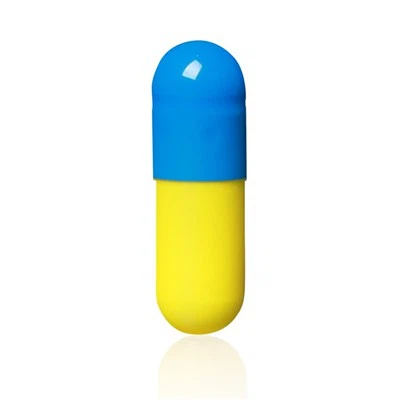
First, let’s start with the basics: both soft and hard liquid-filled capsules are designed to hold active ingredients that don’t mix well with solid excipients, or ingredients that are oily, unstable, or hard to ingest as a powder. But their manufacturing processes are night and day, and that shapes every other detail. Hard liquid-filled capsules—more commonly called liquid hard-shell capsules, or LHCCs—are made using a two-piece shell system, similar to standard hard gelatin capsules. The first half is a “cap” and the second is a “body,” each formed separately from a hard, rigid material, then filled with liquid, and snapped together. Soft liquid-filled capsules, on the other hand, are a single, seamless shell—no cap or body, just one continuous piece that’s formed around the liquid fill during a rotary die process. That core manufacturing difference is where all the other variations start.
Let’s dive deeper into the shell materials, because that’s what drives the differences in feel, stability, and use cases. Hard liquid-filled capsules are almost always made from hard gelatin, derived from animal collagen (usually pork or beef skin and bone), though vegetarian options like hydroxypropyl methyl cellulose (HPMC) hard shells are also available. The hard shell is rigid, so it holds its shape even before it’s ingested. That makes it ideal for products that need to be easy to handle on high-speed manufacturing lines, or for customers who prefer a firm, predictable capsule that doesn’t squish in their pocket or bottle. Soft liquid capsules, by contrast, are made from a plasticized gelatin or HPMC mixture—meaning extra glycerin or sorbitol is added to make the shell flexible and elastic. That’s why softgels feel like a little squishy gel tab when you hold them, and why they’re easy to swallow for people who struggle with hard pills.
But shell material isn’t the only difference when it comes to the fill itself. Liquid hard-filled capsules have a unique advantage here: because their shell is a rigid two-piece system, they can hold a much wider range of liquid formulations than softgels. Softgels rely on a seamless, flexible shell that’s sealed around the fill, which means the fill has to be non-aqueous (no water) to prevent it from leaking through the shell or causing the softgel to dissolve prematurely. That works great for oily ingredients like fish oil, vitamin E, or CBD, which are hydrophobic. But hard liquid-filled capsules can hold both non-aqueous and even aqueous (water-based) liquids, because their rigid, sealed two-piece structure doesn’t absorb water from the fill. That means you can formulate products that would never work in a softgel—things like water-soluble vitamins, herbal tinctures, or even liquid extracts that have a high water content. That’s a game-changer for formulators who want to create products that aren’t limited to oily bases.
Another key difference is stability and shelf life. Let’s start with softgels, since they’re more prone to stability issues. Because their shell is plasticized with glycerin, softgels can be sensitive to humidity and temperature. If a softgel is stored in a bathroom cabinet where humidity is high, for example, the shell can absorb moisture from the air, making it sticky or even soft enough to stick to other capsules in the bottle. Conversely, if it’s stored somewhere too dry, the shell can lose glycerin, become brittle, and crack, which leads to leakage. Hard liquid capsules, with their rigid, less hygroscopic shell (hard gelatin absorbs much less moisture than plasticized softgel gelatin), are far more stable in variable conditions. They can be stored in a wider range of temperatures and humidity levels, so they’re a better choice for products that might be shipped to customers in hot, humid climates, or that sit on retail shelves for long periods without climate control. That stability also translates to a longer shelf life for many hard liquid-filled capsule products—often 2 to 3 years, compared to 1 to 2 years for most softgels.
Swallowability is another area where people often notice the difference. Softgels have a long-standing reputation for being easier to swallow than hard pills, and that’s not just a myth. The soft, flexible shell molds to the shape of your throat when you take it with water, so it glides down smoothly. For people with dysphagia, or anyone who struggles to swallow large pills, softgels are often the go-to choice. But wait—hard liquid capsules aren’t just large, rigid pills. Because the fill is liquid inside, the two-piece shell is thinner than a standard hard gelatin capsule, and the capsule itself is often filled with less air, so it’s actually lighter than a same-sized hard pill. That makes it surprisingly easy to swallow, even for people who struggle with hard tablets. And if you prefer a smaller capsule, hard liquid capsules can be formulated to be more compact than softgels holding the same amount of active ingredient, since the two-piece design allows for a more efficient fill without excess shell material.
Then there’s versatility in dosing and formulation. Softgels are limited in size because the rotary die process used to make them can only produce capsules up to a certain diameter—usually around 1000 milligrams. If you need to hold a higher dose, say 1500 milligrams of a liquid ingredient, you either have to use two softgels or switch to a larger format. Hard liquid capsules, though, can be made in a much wider range of sizes, from tiny 100-milligram capsules for low-dose vitamins to large 2000-milligram capsules for high-potency herbal extracts. They can also hold blends that are too thick for softgels—viscous liquids, semi-solids, even small amounts of powder mixed with liquid—without any issues. That flexibility makes hard liquid capsules a better choice for custom formulations, especially for brands that want to create unique, high-dose products that don’t fit the standard softgel mold.
I often get asked about which is cheaper to manufacture, and the answer isn’t as straightforward as you might think. Softgels have a reputation for being low-cost for large runs, because the rotary die process is highly automated and can produce thousands of capsules per hour. But the material for softgels—plasticized gelatin or HPMC—can add up, especially for brands using high-quality vegetarian shells. Hard liquid capsules, on the other hand, have a slightly higher setup cost for the manufacturing equipment, because you need separate lines for forming the cap and body, and for filling the liquid into each half. But for smaller to medium production runs, hard liquid capsules are often more cost-effective, because there’s less waste. Softgels can have a higher rejection rate during manufacturing, especially if there’s a defect in the seamless shell, which adds to the cost. Hard liquid capsules, with their two-piece design, have lower defect rates, so more of the capsules you produce are usable.
Of course, neither is perfect for every use case. Let’s recap the key scenarios where each makes sense. Choose a soft liquid-filled capsule if: you’re formulating an oily or non-aqueous ingredient, ease of swallowing is a top priority, you need a soft, flexible capsule that won’t feel rigid in your hand, and you’re producing a large run of a standard-sized product. Choose a hard liquid-filled capsule if: you need to hold aqueous liquids or viscous blends, you need a capsule that’s stable in high humidity or temperature, you need a wide range of dose sizes, or you’re working with a smaller run where lower waste is a priority.
As a liquid-filled capsules supplier, I work closely with every customer to figure out which option aligns with their brand, product, and audience. I’ve seen brands switch from softgels to hard liquid capsules because they needed to add a water-based ingredient that would have destroyed their softgel stability, and vice versa—brands switch to softgels because their customers consistently tell them hard pills are too hard to swallow. There’s no universal “best” option, which is why understanding the differences is so important.
At the end of the day, the core purpose of both soft and hard liquid-filled capsules is the same: to deliver active ingredients in a way that’s convenient, effective, and easy for customers to use. Whether you’re a brand launching a new supplement, a pharmaceutical company looking for a better way to deliver liquid medications, or a personal care brand creating oral care products, the choice between soft and hard liquid-filled capsules comes down to your specific needs.
If you’re still not sure which is right for your product, or you’re ready to explore custom liquid-filled capsule solutions for your brand, I’m here to help. We can walk through your formulation, size requirements, and production goals to find the perfect fit for your product line. Don’t hesitate to reach out to start a conversation about your liquid-filled capsule needs.
Enteric Coated Capsules References
- Patel, M. R., et al. (2018). Liquid-filled capsules: A review of manufacturing, formulation, and applications. Journal of Pharmaceutical Sciences, 107(5), 1247-1262.
- Food and Drug Administration. (2020). Guidance for Industry: Liquid-Filled Oral Dosage Forms. U.S. Department of Health and Human Services.
- Brenner, G. S. (2021). Soft vs hard gelatin capsules: Stability and performance differences. International Journal of Pharmaceutics, 598, 120347.
- European Directorate for the Quality of Medicines & HealthCare. (2019). Monograph on Hard Gelatin Capsules and Soft Gelatin Capsules. Council of Europe.
- Smith, A. L., et al. (2020). Patient preferences for oral dosage forms: A cross-sectional study. Journal of the American Pharmacists Association, 60(3), 389-395.
Hubei Kornnac Pharmaceutical Co., Ltd.
Hubei Kornnac Pharmaceutical Co., Ltd. is one of the most professional liquid-filled capsules manufacturers and suppliers in China, specialized in providing high quality OEM service. Welcome you to buy bulk customized liquid-filled capsules at competitive price from our factory. Also, samples are available.
Address: No.439 Hebei Avenue, Chibi, Hubei Province, 437300, China.
E-mail: service@kornnaccaps.com
WebSite: https://www.kornnaccaps.com/
