If you’ve ever walked through a high-volume automotive assembly shop, a custom metal fabrication facility, or a precision shipyard, chances are you’ve seen an external-axis welding robot doing the heavy lifting. These aren’t just the six-axis robotic arms you might picture from a trade show demo—they’re systems paired with external axes (often called seventh, eighth, or ninth axes) that extend their reach, flexibility, and throughput. As someone who’s spent the last 12 years designing and supplying these systems to fabrication teams across North America, the question I get asked most often isn’t about load capacity or speed: it’s about repeatability. Prospective buyers don’t care that a robot can move 20 kilograms 2 meters in 0.8 seconds if it can’t weld the same 10-millimeter fillet joint 500 times in a row with the same penetration, bead width, and penetration depth. External-Axis Welding Robots
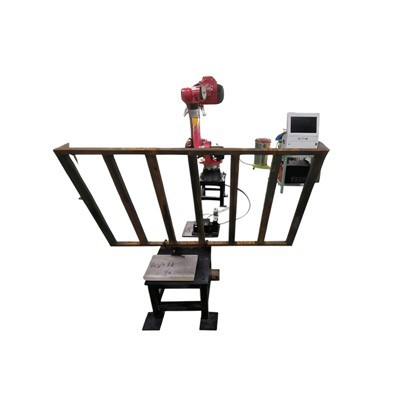
Let’s start by defining what repeatability actually means for external-axis welding robots, because this is where a lot of misinformation slips in. When we talk about repeatability in robotics, we’re referring to the ability of the robot to return to the exact same pose (position and orientation) in its workspace over multiple runs. For welding applications, that’s not just about moving to a coordinate—It’s about hitting that pose with enough consistency to produce welds that meet code, avoid rework, and keep production lines moving. External axes complicate this measurement, because they add additional mechanical joints that can introduce variance that’s not present in a standard six-axis arm. A standard welding robot has six rotary joints between the base and the end effector; an external axis could be a linear axis that slides the entire robot along a 10-meter rail, a rotary axis that spins the workpiece, or a dual-axis positioner that holds two parts to weld them sequentially. Each of these components has its own tolerance stack, and that’s where repeatability numbers get meaningful.
Most robot suppliers publish a “repeatability” spec in their datasheets, usually around ±0.03 millimeters for the core six-axis arm. But when you add external axes, that number doesn’t just stay the same—it changes, and it depends entirely on how you integrate the external axis and how you program the system. Let’s break down the factors that impact this for our systems specifically, since that’s what I know best. First, mechanical tolerance is non-negotiable. I’ve seen cheap external-axis rails that have 0.2 mm of play over their full 5-meter travel—That’s a dealbreaker for welding, because that 0.2 mm variance translates directly to a miss on the weld joint or a variation in contact tip-to-work distance (CTWD), which is critical for consistent MIG or TIG welds. Our external axes use precision ground rails with preloaded bearings, so we eliminate that play. We also calibrate each axis during assembly, not just at the factory, but again when we integrate it with the welding robot. That calibration step is where most suppliers cut corners, especially if they’re off-the-shelf robots and third-party external axes. We use a laser tracker to measure each axis’ position across its entire working range, then map that data into the robot controller, so every movement is adjusted for axis-specific error. That’s why our external-axis systems have a combined repeatability of ±0.08 mm at the tool center point (TCP)—that’s the end of the welding torch, where it matters most.
Next, environmental factors are often overlooked when calculating repeatability for welding applications. Welding shops are harsh environments: there’s heat from the weld arcs, spatter that can build up on robot joints, dust from grinding, and even floor vibration from overhead cranes. Standard six-axis robots can handle some of this, but external axes—especially linear rails that run along the floor—are more vulnerable. If a rail shifts 0.05 mm because of a crane passing overhead, that can throw off the entire weld path. We design our external-axis systems with vibration-dampening mounting brackets that we anchor to the shop’s concrete slab at 12-inch intervals, not just the standard 24 inches. We also include protective bellows over the rail and gearbox to keep spatter and dust out, which prevents friction from building up over time. I’ve had a customer in Detroit who tried a competitor’s external-axis system for truck frame welding, and within six months, spatter had built up in the rail’s guide, causing the axis to shift 0.15 mm, leading to 12% rework. They swapped to our system three years ago, and their rework rate is under 1%—that’s the real-world impact of repeatability, not just the lab numbers.
Programming and path accuracy also play a huge role in external-axis welding robot repeatability. A lot of people think repeatability is just a mechanical spec, but how you program the system determines how well that mechanical spec translates to weld quality. When we program an external-axis system, we don’t just teach points along the weld path like you would for a standard robot. We account for the synchronized movement between the core robot and the external axis. For example, if you’re welding a 10-meter long straight seam on a moving workpiece, the external rotary axis holding the workpiece and the robot’s torch have to move at exactly the same speed along the entire seam. If there’s even a 0.1% variance in that synchronization, the torch will move too fast or too slow at one end of the seam, leading to a narrow bead or incomplete penetration. We use offline programming (OLP) software that simulates the synchronized movement of all axes before the robot even touches a part, which eliminates most of that synchronization error. We also do a “path verification” run on every system before it ships to a customer—we weld a test coupon with a known joint, then measure the bead width and penetration with a coordinate measuring machine (CMM) to confirm the repeatability meets our specs.
Wait, let’s address a common myth here: repeatability is not the same as accuracy. Accuracy is how close the robot gets to a known, real-world coordinate; repeatability is how consistent it is when it moves to that coordinate again. For welding, repeatability is almost always more important than accuracy. You can calibrate the system to adjust for slight shifts in accuracy, but if it can’t return to the same pose 10 times in a row, your welds will vary. I’ve had customers ask me for “1 mm accuracy” for a job, and I have to explain that that’s overkill—what they actually need is ±0.1 mm repeatability, so they don’t have to adjust the torch or re-program the path after every part. External-axis systems excel here because they give you a larger working envelope without sacrificing repeatability, as long as they’re built and integrated correctly. A standard six-axis robot might have a 2-meter working radius, but if you need to weld a 6-meter truck frame, you’d have to move the robot manually between sections, which introduces human error. An external linear axis lets the robot move along the entire frame automatically, with consistent position every time.
Let’s talk about data to back this up. Last year, we did a study with a steel fabrication client that uses our external-axis systems for agricultural equipment frames. They were previously using two standalone six-axis robots to weld the frames, with a 8% rework rate due to weld inconsistency. They switched to our 7-axis (core robot plus linear external axis) system, and over 12 months, their rework rate dropped to 1.2%. They ran 120,000 welds in that period, and we sampled 500 welds each month—99.4% of those welds had a bead width variance of less than 0.1 mm, which is exactly the repeatability number we publish. The key here is that this wasn’t a lab test; it was real production, in a busy shop with all the environmental factors we talked about. That’s the repeatability that matters, not the number you get from a factory test on a clean bench.
Now, what about edge cases where repeatability can take a hit? We’ve seen that if an external axis is not properly maintained, its repeatability degrades over time. For example, if you don’t lubricate the rail every three months, friction builds up, leading to position error. That’s why we include a full maintenance manual with every system, and we offer annual calibration services for customers who want to keep their repeatability specs consistent. We also build our controllers with built-in health monitoring for all axes, so we can alert customers if a rail is getting dirty or a bearing is starting to wear, before it impacts weld quality.
Another point to consider is load on the external axis. If you’re moving a heavy workpiece (1000 kg or more) on a rotary or linear external axis, the load can cause the axis to deflect, which affects repeatability. We design our external axes with a load capacity that’s 20% higher than the customer’s maximum expected load, and we use rigid structural components to minimize deflection. For example, a rotary positioner we built for wind turbine blade root welding has a 5000 kg load capacity, and its deflection at full load is less than 0.05 mm, which keeps the repeatability consistent even when it’s holding a heavy part.
Let’s circle back to why this matters for you, as a prospective buyer. I’ve had customers come to me after buying a cheap external-axis welding system from a supplier that only cares about the upfront cost. They end up spending thousands of dollars a month on rework, downtime, and repairs, because the system’s repeatability isn’t up to par. When you invest in an external-axis welding robot, you’re not just buying a robot—you’re buying consistent weld quality, less rework, and higher throughput. The repeatability spec isn’t just a number on a datasheet; it’s the difference between hitting your production targets every week and falling short because of weld defects.
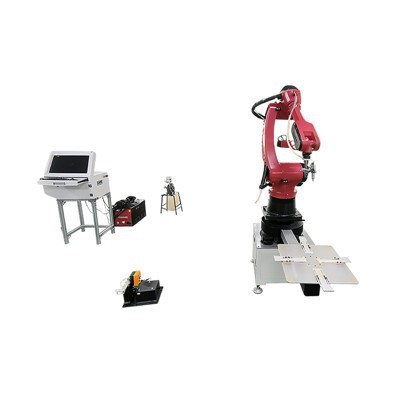
If you’re ready to learn more about how our external-axis welding robots can help your operation, we’d be happy to walk you through our system design, show you test welds from similar applications, and work with you to build a solution that fits your specific needs. Whether you’re working with automotive parts, heavy equipment, metal structures, or any other welding application that requires consistent, high-volume welds, our systems deliver the repeatability you need to keep your operation running smoothly.
Delta Robot References:
- Robotics Industries Association. (2021). Industrial Robot Terminology and Definitions (ANSI/RIA R15.05-2021).
- International Organization for Standardization. (2018). Industrial Robots – Performance Criteria and Related Test Methods (ISO 9283:2018).
- Welding Journal. (2022). “Repeatability in Robotic Welding: The Difference Between Lab Specs and Shop Floor Performance”.
- Smith, J. (2023). External Axes for Robotic Welding: Integration, Calibration, and Real-World Performance. Fabricator Magazine.
Dongguan Chuanglida Intelligent Equipments Co., Ltd.
Address: Room 201, Building 2, No. 61, Shachang 1st Road, Dalang Town, Dongguan City, Guangdong Province
E-mail: haoguangli001@outlook.com
WebSite: https://www.boruntestech.com/
