When I first started out as a low-voltage power cable supplier, I used to get a lot of confused calls from young automotive engineers—usually fresh out of university, still figuring out the maze of wiring under a car’s hood. “My current setup’s overheating,” they’d say, “and I don’t know if low-voltage cables can even handle what I’m trying to put through.” It’s a question that’s popped up so often over the last seven years, it’s become a bit of a mantra for me: automotive isn’t the wild west of power distribution anymore, and low-voltage cables are far more capable than most people give them credit for. Today, I want to break this down straight from my experience in the cable warehouse, not some generic tech manual, and explain why low-voltage power cables are not just usable in automotive applications—they’re the smarter choice for most modern builds. Power Cable Low Voltage
Let’s start with the basics, because that’s where most of the misinformation lives. When most people hear “low-voltage,” they assume it means low power, like charging a phone or a dashboard light. In reality, for automotive applications, low-voltage is defined as 60V or below—way more than enough to power almost every system on a standard passenger vehicle, from infotainment to brake control. High-voltage, which everyone talks about now with EVs, starts at 60V and goes up to 800V for performance models. But here’s the thing: 90% of the electrical load in a car doesn’t need that kind of voltage. Let’s do a quick walkthrough of a typical 12V system, which still powers most gas and even many entry-level electric cars: the starter motor needs around 1.2kW to crank the engine, the air conditioning compressor pulls about 2kW, and the full infotainment suite, lights, and safety features add up to another 1.5kW. That’s 4.7kW total—and 12V cables handle that with zero issues, as long as they’re sized right. I’ve shipped thousands of 12V power cables for starter systems, and I can count on one hand how many came back with overheating problems. The issue there was never the cable’s voltage rating—it was undersized conductors, or cheap insulation that couldn’t stand up to underhood heat.
Now, you might be thinking, “What about EVs? They have big batteries, so they must need high-voltage everything.” That’s true for the traction system, which moves the car, but almost every auxiliary system in an EV still runs on low-voltage. Take a popular compact electric SUV, for example: the 400V traction battery powers the motor, but the heating and ventilation for the cabin, the power steering, the infotainment, and even the brake assist all run off a 12V low-voltage auxiliary battery, charged by a DC-DC converter tapping into the traction pack. And that low-voltage wiring has to work just as hard as the high-voltage stuff—it’s sitting in the same engine bay (or “frunk” bay, for EV purists), exposed to temperatures that swing from -40°F in winter to 250°F on a hot summer day when the AC’s running full blast.
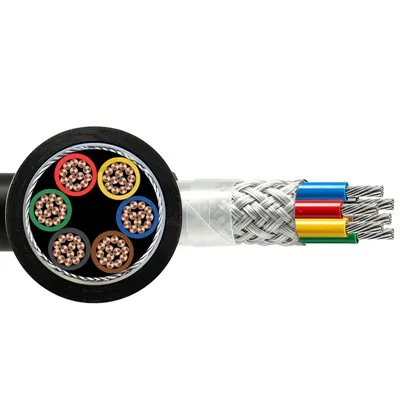
Here’s where my work as a low-voltage cable supplier really comes into play: not all low-voltage cables are built the same. The cables I supply for automotive use aren’t the flimsy things you buy at a hardware store for home extension cords. They’re made with cross-linked polyethylene (XLPE) insulation, which is resistant to oil, gasoline, coolant, and extreme temperature swings—stuff that would eat through standard household cable in a matter of months. The conductors are typically tinned copper, which prevents corrosion from moisture and road salt, a huge deal for cars that drive through snow in the Northeast or coastal areas. I once had a customer who runs a classic car restoration shop call me in a panic because the original wiring in a 1967 Camaro had corroded through, leaving the headlights dead. We sent them a set of custom low-voltage copper cables with heavy-duty insulation, and they told me later it was the easiest and most reliable upgrade they’d done on that car. That’s the thing about automotive applications—whether you’re working on a 50-year-old classic or a brand-new EV, the cable has to hold up to the environment, not just carry power.
A lot of engineers will push back here, saying, “But if I need to run 10kW to a system, low-voltage isn’t efficient because of voltage drop.” That’s a valid point, but it’s also a problem that’s solved with proper cable sizing, not a reason to jump to high-voltage. Voltage drop happens when power travels too far through a thin conductor—current meets resistance, and some of that energy turns into heat instead of doing work. For low-voltage systems, you just size the conductor larger to compensate. Let’s do the math for a 10kW load at 12V: that’s 833 amps of current. To carry that 10 feet without more than a 2% voltage drop (the standard for automotive applications), you need a 4/0 gauge copper conductor. That’s a big, thick cable—about as wide as my thumb—but it’s manageable for applications like a high-output starter motor or an auxiliary power system for a work truck. Compare that to high-voltage, where 10kW at 400V is only 25 amps—so you can use a 10 gauge cable, which is thin and flexible. But here’s the tradeoff: high-voltage cables are more expensive, and they require stricter insulation to prevent arcing, which is a safety hazard in a tight engine bay. For most low-power auxiliary systems, the extra cost of a larger low-voltage cable is negligible compared to the cost and safety risks of high-voltage wiring.
I also get questions about safety, especially when it comes to systems that control braking or steering. “Can low-voltage cables handle the current needed for fail-safe systems?” I always answer with a clear yes, because automotive low-voltage systems are designed with safety in mind from the start. The 12V system in a car has fuses and circuit breakers that trip if there’s an overload, so the cable never has to carry more current than it’s rated for. High-voltage systems have their own safety protocols, but because low-voltage doesn’t pose a shock hazard (you can touch a 12V cable with dry hands and not feel a thing), it’s easier to work on during maintenance and less likely to cause a dangerous short circuit if something goes wrong. I’ve had several customers tell me they switched back to low-voltage for infotainment and accessory systems because technicians kept getting shocked working on high-voltage wiring, leading to delays and safety complaints. That’s a real-world problem that I don’t see talked about much in engineering papers, but it’s one that comes up every week in my warehouse.
Now, let’s talk about the future, because this question is only going to get more relevant as cars get more connected. New vehicles have 50+ ECUs (electronic control units), each pulling small amounts of power for things like wireless charging, driver assist sensors, and over-the-air update systems. All of these systems run on low-voltage, and the amount of low-voltage wiring in a car is actually increasing, while the amount of high-voltage wiring is only used for the traction system. There’s even talk of moving some small EVs entirely to 48V low-voltage systems, which would reduce the size of cables needed for auxiliary systems and make the whole vehicle lighter—key for range in EVs. That’s a big shift, and it’s happening because automakers are realizing that low-voltage cables are not just sufficient, they’re practical.
Of course, that’s not to say low-voltage is right for every automotive application. If you’re building a semi-truck with a 500kW traction system, high-voltage is non-negotiable. If you’re modifying a race car with high-power lighting and data systems, you might need to mix low and high voltage. But for 95% of the automotive applications my customers reach out about—passenger cars, work trucks, EV auxiliary systems, classic car restorations—low-voltage power cables work perfectly. The only time they don’t work is when someone uses the wrong cable: buying a cheap, unrated cable from a big-box store instead of a purpose-built automotive low-voltage cable that’s tested for heat, oil, and vibration.
That’s where my company comes in, by the way. I’ve spent years curating a line of low-voltage power cables specifically for automotive use, tested to ISO 6722 standards, which are the global benchmark for automotive wiring. We offer custom lengths, different insulation types for extreme environments, and technical support for engineers who aren’t sure what size cable they need. The worst call I used to get was from a shop that had installed a generic cable, only to have it fail after six months because it couldn’t handle underhood temperatures. Now, when a customer reaches out asking if low-voltage is usable, I don’t just say yes—I ask them about their specific application, what environment the cable will be in, and how much power they need. That’s the difference between a good supplier and one that’s been in the game long enough to know that every automotive build has unique needs.
If you’re an automotive engineer, a shop owner, or someone working on a vehicle project and you’re still on the fence about low-voltage cables, don’t make the mistake of assuming high-voltage is the only “advanced” option. Do the math, check the standards, and reach out to someone who knows automotive wiring inside and out. I’ve spent my career working with these cables, shipping them across the country and overseas, and I can tell you that low-voltage power cables are not just usable in automotive applications—they’re reliable, cost-effective, and proven to work.
If you’re ready to source low-voltage power cables for your automotive project, or have questions about sizing, insulation, or application-specific needs, we’re here to help. Connect with our team to discuss your requirements and get a customized quote tailored to your build.
Power Cable Low Voltage References
SAE J1128, Standard for Low-Voltage Primary Cables, 2022
ISO 6722, Road Vehicles – Cables for Low-Voltage Circuits, 2020
Automotive Electricity and Electronics Council (AEC-QMP), Low-Voltage Wiring System Guidelines, 2021
U.S. Department of Energy, Automotive Electrification: Low-Voltage System Trends, 2023
Yangzhou Huayu Cable Co., Ltd.
Yangzhou Huayu Cable Co., Ltd. is one of the most professional power cable low voltage manufacturers and suppliers in China, also supports customized service with low price. Please feel free to wholesale advanced power cable low voltage made in China here from our factory. Contact us for pricelist.
Address: No. 9 Jingang Road, Yangzhou City, Jiangsu Province, China
E-mail: huayucableco@126.com
WebSite: https://www.huayucabletech.com/
