If you’ve ever worked in industries ranging from pharmaceuticals to food and beverage, water treatment to cosmetics, you’ve likely encountered Disodium EDTA. As someone who’s been in the Disodium EDTA supply business for over 12 years—helping clients big and small source consistent, high-quality product for their operations—I’ve heard this question more times than I can count: What is the formula for Disodium EDTA? It’s a simple question, but the answer ties together chemistry, manufacturing, and the real-world value this compound delivers for your bottom line. Let’s break it down, no stuffy jargon, just straight talk from a supplier who lives and breathes EDTA every day. Disodium EDTA

First, let’s start with the basics for anyone new to the compound. EDTA stands for Ethylenediaminetetraacetic acid, a chelating agent—meaning it binds tightly to metal ions like calcium, iron, or magnesium to form stable, soluble complexes. That might sound technical, but the function is actually pretty straightforward: it locks up unwanted metal ions that would otherwise cause problems, like making your drinking water cloudy, ruining a skincare product’s texture, or causing a medication to degrade before it reaches the patient. Now, Disodium EDTA is the sodium salt form of EDTA, which makes it more water-soluble than the original acid version—super important for most industrial and commercial applications, since water is the universal solvent we all rely on.
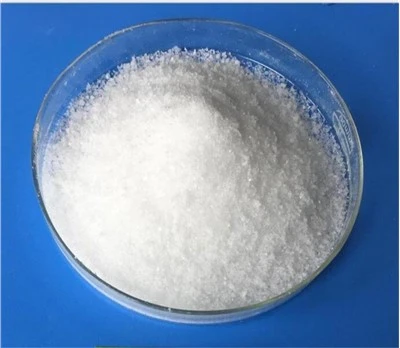
So, what’s the actual chemical formula? The molecular formula for Disodium EDTA is C₁₀H₁₄N₂Na₂O₈. Wait, let’s make that clear: that’s 10 carbon atoms, 14 hydrogen, 2 nitrogen, 2 sodium, and 8 oxygen. But if you’re working with it in the lab or on the production floor, you might also see its structural formula written out as (NaOOCCH₂)₂NCH₂CH₂N(CH₂COONa)₂. That shows the exact arrangement of atoms: two nitrogen atoms linked by an ethylene (CH₂CH₂) bridge, each bonded to two acetic acid groups, and each of those acetic acid groups has a sodium ion replacing a hydrogen, making it the disodium salt. A lot of new clients ask if that’s the same thing as EDTA disodium dihydrate, and the short answer is yes—most commercial Disodium EDTA we supply is the dihydrate form, meaning it has two water molecules attached to each molecule. The formula for that hydrated version is C₁₀H₁₄N₂Na₂O₈·2H₂O, which is the form that’s most widely used because it’s a stable, easy-to-handle crystalline powder, not a liquid.
Now, as a supplier, I know the formula is just the start—you need to understand what that formula means for your specific use case. Let’s talk about how that formula comes to life in manufacturing, because that’s where a lot of quality issues start. To make Disodium EDTA, you start with ethylenediamine, chloroacetic acid, and sodium hydroxide. The reaction bonds those components to form the EDTA backbone, then adds two sodium ions to neutralize the four acidic groups on EDTA, resulting in the disodium salt. The key here is that the formula isn’t just a string of letters and numbers—it’s a guarantee of consistency. If a batch of Disodium EDTA doesn’t match that formula, it won’t bind metal ions as effectively, which can throw off your entire process. For example, a food manufacturer might use Disodium EDTA to prevent canned fruits from browning; if the formula is off, the product will discolor and get rejected. A water treatment plant might use it to scale pipes; an impure batch could leave residue instead of removing it.
I’ve seen this play out firsthand over the years. Early on in my career, I worked with a small beverage company that had a bad experience with a supplier who sold a product labeled as Disodium EDTA but had a lower sodium content than required by the formula. The result? Their soft drinks had a metallic aftertaste that made customers complain, and they had to pull two batches off the shelves. That’s when I realized that as a supplier, my job isn’t just to deliver a chemical with the right formula—it’s to deliver a product that meets that formula 100% of the time, every time. That’s why we test every batch we ship for purity, ensuring it hits the C₁₀H₁₄N₂Na₂O₈ formula exactly, with no extra or missing components that could cause problems for our clients.
Let’s also clear up a common confusion: Disodium EDTA vs. EDTA Tetrasodium. A lot of people mix these two up, and it all comes down to the formula. Tetrasodium EDTA has four sodium ions instead of two, so its formula is C₁₀H₁₂N₂Na₄O₈. This makes it more soluble in highly alkaline solutions, while Disodium EDTA works better in neutral to slightly acidic conditions—like most food and cosmetic formulations. For example, if you’re making a shampoo that’s pH 6, Disodium EDTA is the right choice; if you’re making a concrete cleaner that’s pH 12, Tetrasodium is better. Knowing that difference starts with understanding the formula, and that’s why we take the time to walk our clients through which form matches their needs.
Another thing worth noting is that the formula of Disodium EDTA determines its regulatory status. For industries like pharmaceuticals or food, you need to use a product that meets the formula specifications set by agencies like the FDA, EP, or USP. For example, the USP monograph for Disodium EDTA requires the formula to have a purity of not less than 99.0% and not more than 101.0% of the C₁₀H₁₄N₂Na₂O₈·2H₂O formula. That’s not a arbitrary number—it’s set to ensure the compound works safely and effectively in medical products, like intravenous solutions or topical creams. As a supplier, we keep up with these regulatory requirements to make sure every batch we ship is compliant, so our clients don’t have to worry about failed audits or product recalls.
Now, I know if you’re reading this, you’re likely looking for a reliable Disodium EDTA supplier who delivers on both formula and service. Over the years, I’ve built my business on more than just selling a chemical with the right formula—I’ve built it on being a partner to clients. Whether you’re a small craft brewery needing a few hundred pounds for product stability or a large water treatment facility needing tons a month, we can tailor our supply to your needs, and we provide full COA (Certificate of Analysis) with every shipment, so you can confirm the formula matches exactly what you ordered. No hidden impurities, no off-spec batches, no last-minute delays that cost you time and money.
If you’re tired of suppliers that cut corners on formula consistency, or if you’re new to working with Disodium EDTA and want to talk through which form is right for your application, I’d love to connect. We can discuss your specific needs, answer any questions you have about the formula, purity, or supply volume, and give you a transparent quote with no hidden fees. The Disodium EDTA market is crowded, but what sets us apart is that we treat every client like a long-term partner, not just a one-time order. We’ve been in this industry long enough to know that when you get the formula right, your operations run smoothly, your products meet standards, and your customers stay happy.
As you move forward with sourcing Disodium EDTA, remember that the formula is more than just a basic chemical fact—it’s the foundation of performance, reliability, and regulatory compliance. Don’t settle for suppliers that can’t back up their product with consistent formula specifications. Reach out to us today to discuss your requirements, and let’s build a supply relationship that works for your business.
Potassium Acetate References:
- The Merck Index: An Encyclopedia of Chemicals, Drugs, and Biologicals, 15th Edition. Royal Society of Chemistry, 2013.
- United States Pharmacopeia: The National Formulary (USP 43-NF 38). United States Pharmacopeial Convention, 2020.
- Dean, J. A. Lange’s Handbook of Chemistry, 16th Edition. McGraw-Hill Education, 2005.
- Ash, M., and Ash, I. Handbook of Chemical Compounding, 2nd Edition. Synapse Information Resources, Inc., 2007.
Jiangsu Kolod Food Ingredients Co., Ltd.
As one of the most professional disodium edta manufacturers and suppliers in China, we’re featured by quality products and good price. Please rest assured to wholesale bulk disodium edta made in China here and get free sample from our factory. Customized orders are welcome.
Address: South Side of Weier Road, Guanyun Development Zone, Lianyungang City, Jiangsu Province, China
E-mail: sales1399@jskolod.com
WebSite: https://www.kolod-group.com/
